Introducing ‘Girl, Interrupted’
Journalists unite across borders to report on women and girls in Central America, and their reproductive rights

Para la edición de este mes, nuestra sala de redacción creció. O, mejor dicho, salimos de nuestra salita y entramos a una más grande. Una que no tiene fronteras ni edificio, pero que une a periodistas que de otra forma estaría trabajando de forma aislado.
During September, when the countries of Central America celebrate our independence—an independence that, of course, was communicated over multiple days, through a process that we commemorate year after year with a torch carried carefully from one country to another—a group of women have joined forces to communicate between our countries, and from our countries to the world.
The topic? The rights of girls in our region, and the threats they face, studied by a group of Central American media outlets—all united by La Sala: Mujeres en la Redacción.
La Sala (The Newsroom) is a space created by and for women directors of independent media outlets in Central America. At El Colectivo 506, we are proud to be part of this community and of the cross-border research we will be co-publishing this month.
More about the project: “The Journalism Production Scholarship program, promoted by La Sala, Mujeres en la Redacción under the leadership of its director Abigail Hernández and the editorial team, brings together five leading journalists from independent media in the region to investigate the setbacks and challenges in the rights of girls and adolescents in Central America.
“Through alliances with leading journalists in El Colectivo 506 (Costa Rica), laCuerda (Guatemala), Radio Progreso (Honduras), Revista Factum (El Salvador) and the Nicaragua Actual / EntrePatrias alliance (Nicaragua), the series examines how government decisions, legal gaps, and the dismantling of public policies directly impact the protection, comprehensive sex education, and prevention of violence in girls and adolescents in the isthmus.
“Each report addresses a crucial aspect of the regional problem: the real impact of eliminating sex ed programs in Costa Rica and an analysis of alternatives from a solutions journalism perspective; the gaps, exclusions, and contradictions in legal reforms regarding consent and sexual violence in Guatemala; the ineffectiveness and lack of implementation of the medical care protocol for victims of sexual violence in Honduras; the invisibility of girls and the removal of sex education from textbooks in El Salvador; and the systematic erasure of violence prevention from the school curriculum under the official discourse in Nicaragua. This is rigorous and collaborative journalistic research that puts the well-being and dignity of girls in Central America at the forefront.”
Introducing “Girl, Interrupted.”
Meet the journalists:

🇳🇮Abigail Hernández López. She is the director of La Sala, Mujeres en la Redacción (Women in the Newsroom). A Nicaraguan journalist, researcher, and human rights advocate with over 20 years of experience specializing in gender issues, press freedom, and photojournalism, she graduated with a degree in Philology and Communication (2002-2007) from UNAN-Managua and is known for her ongoing pursuit of academic and professional innovation.
🇭🇳Iolany Pérez is a Honduran journalist and storyteller who seeks to uphold the dignity of people’s lives. For seven years, she coordinated communications for Radio Progreso and ERIC (Reflection, Research, and Communication Team). She currently spearheads investigative journalism initiatives at this Honduran media outlet and teaches at the National Autonomous University of Honduras (UNAH-Cortés).


🇸🇻Loida Martínez Avelar is an investigative journalist at Revista Factum in El Salvador, and a 2025 Gabo Award winner. She specializes in significant investigations into government corruption and serious human rights violations. She is an honorary professor at Miguel Hernández University in Elche, Spain, and a beneficiary of Reporters Without Borders’ “Safe Space” program. She holds a degree in Social Communication from the Central American University (UCA) and has trained at leading journalism schools across Ibero-America.
🇬🇹Mélina Nantel is a journalist with LaCuerda, a Guatemalan feminist association. She practices journalism aimed at fostering emancipation. Her work intersects gender, human rights, and international cooperation, drawing on her experience as a freelance journalist for Canadian and Central American media outlets in French, English, and Spanish. She holds master’s degrees in International Cooperation and Education from the University of Jyväskylä (Finland) and in Gender and Feminist Studies from McGill University (Canada).


🇨🇷Mónica Quesada Cordero, co-founder of El Colectivo 506 and the Latin American Solutions Journalism Fund, is an award-winning photojournalist with 20+ years of experience developing photography projects in the areas of editorial, portraiture, wildlife, food, and architecture. She holds a master’s degree in Audiovisual and Multimedia Production.
🇨🇷Katherine Stanley Obando, co-founder of El Colectivo 506 and the Latin American Solutions Journalism Fund, is an award-winning journalist, editor, and author who has lived in Costa Rica for 22+ years. She specializes in longform journalism about women’s rights, migration, and education.

*This story was produced as part of a La Sala: Mujeres en la Redacción journalism production grant, funded by Vikes, the Foundation for Media and Development, an initiative that seeks to strengthen independent, critical and investigative journalism—as well as to promote the participation, leadership and projection of women journalists—through influential and impactful actions that contribute to making their voices visible and positioning them as benchmarks of journalism, research and public opinion.
Author

Related Articles

Nicaraguan have replaced sex education with political propaganda
Nicaragua’s Ministry of Education has replaced a gender perspective and violence prevention with moralism, abstinence, and institutional devotion. Thse are the findings of an investigation by Galería News and La Sala: Mujeres en la Redacción.
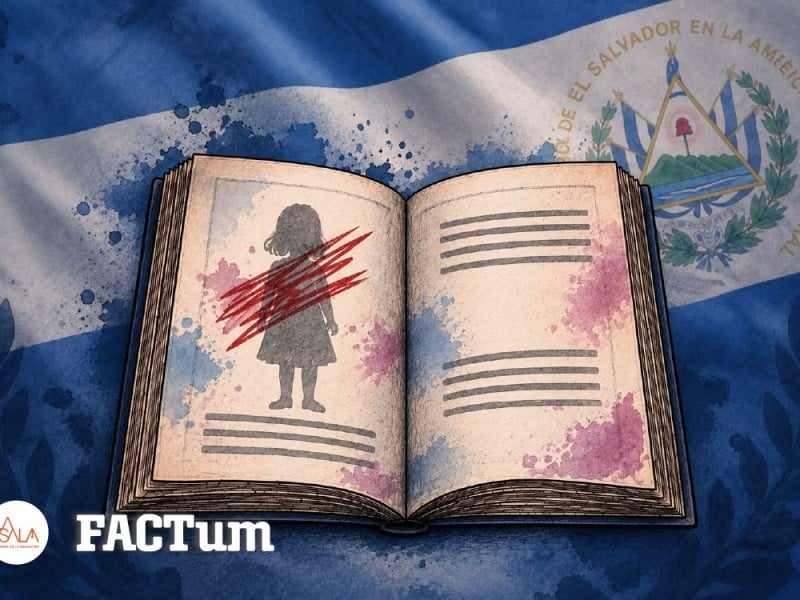
El Salvador: The country that makes girls invisible
Girls in El Salvador have increasingly limited access to sex education. This investigation by Revista Factum and La Sala: Mujeres en la Redacción reveals how cuts to the basic health budget have also left them vulnerable to teenage pregnancy and school dropout.
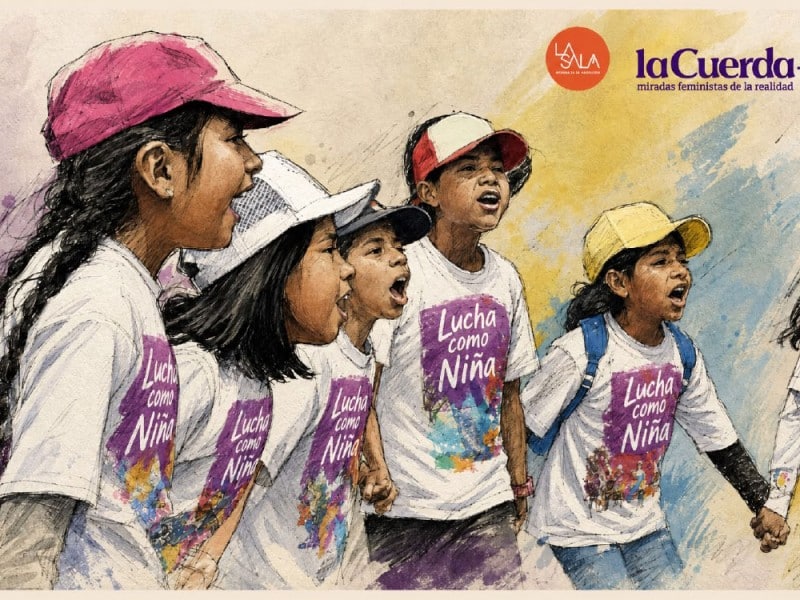
After 17 years of waiting, Guatemala still fails to protect its girls
While a presidential veto and the inaction of the Constitutional Court keep a reform to the age of consent frozen, this investigation reveals how Guatemala maintains a legal vacuum that leaves thousands of survivors of sexual violence and forced pregnancies unprotected.