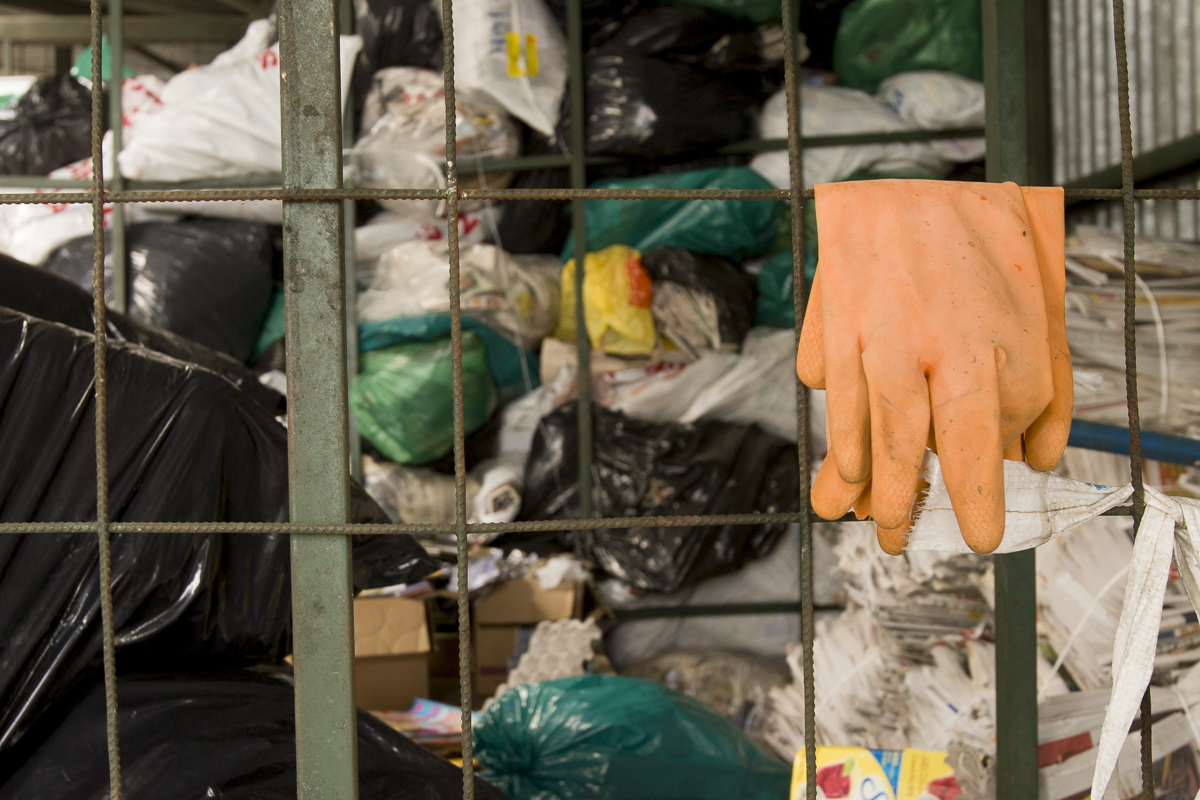

In Ticabán, Guápiles, the lack of municipal collection has driven the community and private managers to see inorganic waste as an entrepreneurial opportunity. From crafts made with bottles to international financing for shredders, this report explores how “trash” can save the environment and the local economy.
Laura Vanessa Salas reports the story in this article created with a grant from “Journalism in Times of Polarization,” a project of the Latin American Solutions Journalism Fund. The Fund is an initiative of El Colectivo 506 in alliance with the SOMOS Foundation. “Journalism in Times of Polarization” is made possible by the support of the Canada Fund for Local Initiatives. The Canada Fund for Local Initiatives—administered by the Embassy of Canada—funds small-scale, high-impact projects aimed at empowering vulnerable communities and populations and promoting human rights for all people.
The article was published by Tele Brunca’s Facebook page on Jan. 11, 2026. It was adapted and translated here by El Colectivo 506 for co-publication. We used Google Translate to support the translation.

Ticabán, in La Rita de Pococí, is a rural community known for its agricultural plantations, pineapple and banana farms, which are the main source of income for its residents. The inadequate management of inorganic solid waste has become a problem affecting residents.
Plastic bottles, cans, glass containers, and paper are discarded alongside organic waste, and the community is unaware of the business opportunities that could be implemented through entrepreneurship using these recyclable materials. It is urgent that a solution be found.
The municipal waste collection service for inorganic waste (for example, plastic, paper, aluminum, and glass) has not yet reached the town of Ticabán due to financial constraints, forcing the community to find its own solutions. In this situation, private waste collectors are currently providing this service.
The situation in Pococí is similar to what’s happening on a national level. According to the report “Cantonal Indicators of Integrated Waste Management 2023-2024″—presented in June 2025 by the Institute for Municipal Development and Advisory Services (IFAM), with the support of the Ministries of Health and Environment and Energy and the German Cooperation Agency (GIZ)—only 4% of the waste generated in Costa Rica receives this “second life,” while 96% ends up in environmental technology parks (PTA, better known as landfills).
In Pococí, most of the waste generated is organic (approximately 58%), and 12% is plastic, according to the study “Material Flow Analysis of Solid Waste in the Guápiles District.” The study was conducted in 2021 by Ariana Solís Blandón, Environmental Sanitation Process Coordinator for the Municipality of Pococí, and Lilliana Abarca Guerrero, from the School of Chemistry at the Costa Rica Institute of Technology (TEC). The same study found that in the commercial sector, 34% of the waste is paper and cardboard.
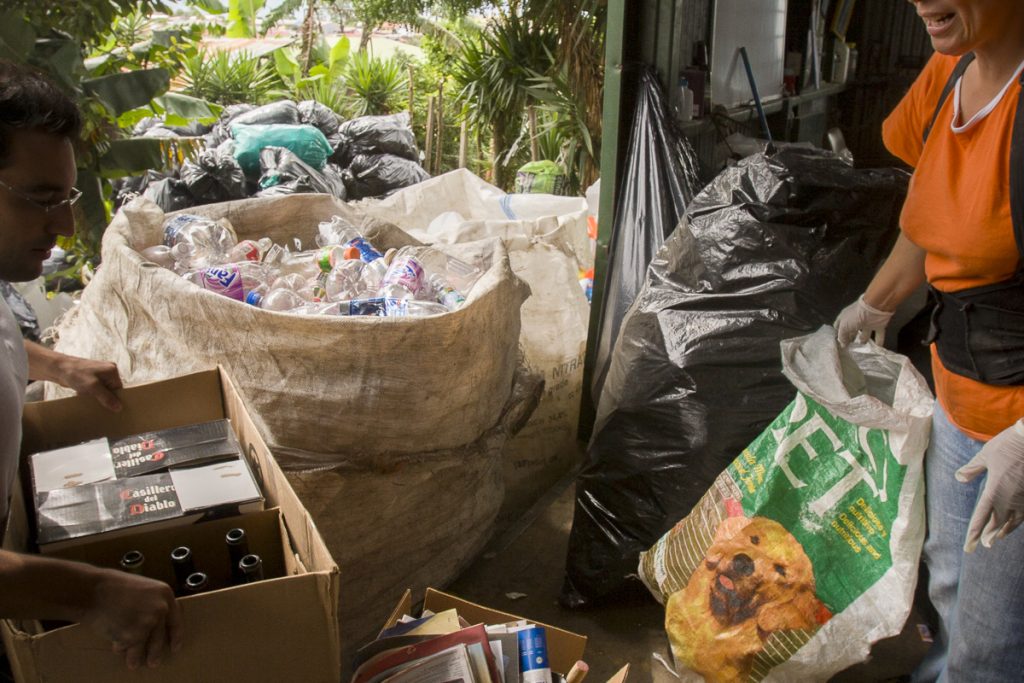
What should be done with inorganic waste?
To address this problem in the town of Ticabán, the Municipality of Pococí proposed an Environmental Education Program to develop replicable strategies such as creating several centralized collection points. This would allow for bimonthly campaigns at a single collection point, such as the Ticabán school—thus simplifying logistics and optimizing municipal resources to make the creation of this route viable, according to Ariana Solis Blandón, Environmental Sanitation Process Coordinator for the Municipality.
The local government also has a Municipal Integrated Waste Management Plan (PMGIR 2023-2028), which aims to organize waste collection and management. It focuses on the waste management hierarchy—prevention, reduction, reuse, recycling, and recovery—to minimize environmental impact. This plan will include specific strategies for source separation and the recovery of inorganic waste including plastics, paper, glass, and metal, promoting a circular economy and citizen co-responsibility, as required by Costa Rica’s Integrated Waste Management Law.
The value of this hidden treasure can multiply when it becomes a source of income. An example of this is the Karito Innovations project, located in Guápiles, which has become a business that uses recovered plastic bottles to create handicrafts that promote Costa Rican identity. It shows that inorganic waste not only saves the environment but also boosts the local microeconomy.
Ariana Solís explained that the local government has been carrying out the “Pococí Verde” environmental initiative for several years, through which plastic and cardboard are collected to a greater extent.
She further stated that the studies conducted with TEC constitute “a general proposal that can be implemented so that the municipality can work with private entities through bidding processes on SICOP [the technological platform for public procurement]. Therefore, anyone wishing to participate must comply with all the requirements previously established in the bidding process.”
The municipality is working on updating its plan for the PMGIRS 2026-2031, focusing on strategies for modernizing waste management, source separation for both organic and inorganic waste, waste recovery, and compliance with national legislation, with a documented proposal for organic waste treatment in Guápiles.
The Municipal Integrated Waste Management Plan (PMGIR 2023-2028) has led to improvements in the availability of collection trucks, allowing them to reach more areas and collect solid waste that is currently being disposed of improperly in many places.
Among the limitations encountered, in addition to financial ones, are a lack of infrastructure, particularly treatment plants; a culture of recycling; funding; and inter-institutional coordination to meet reduction and recycling targets.
Ariana explained that “at the regional level, the work of other municipalities also stands out, such as Talamanca, Limón, Siquirres, Guácimo, Matina, and Sarapiquí.” Each of these has its collection programs and a logistics system tailored to its budget, thus validating the principle that waste management is an obligation that every local government must fulfill.
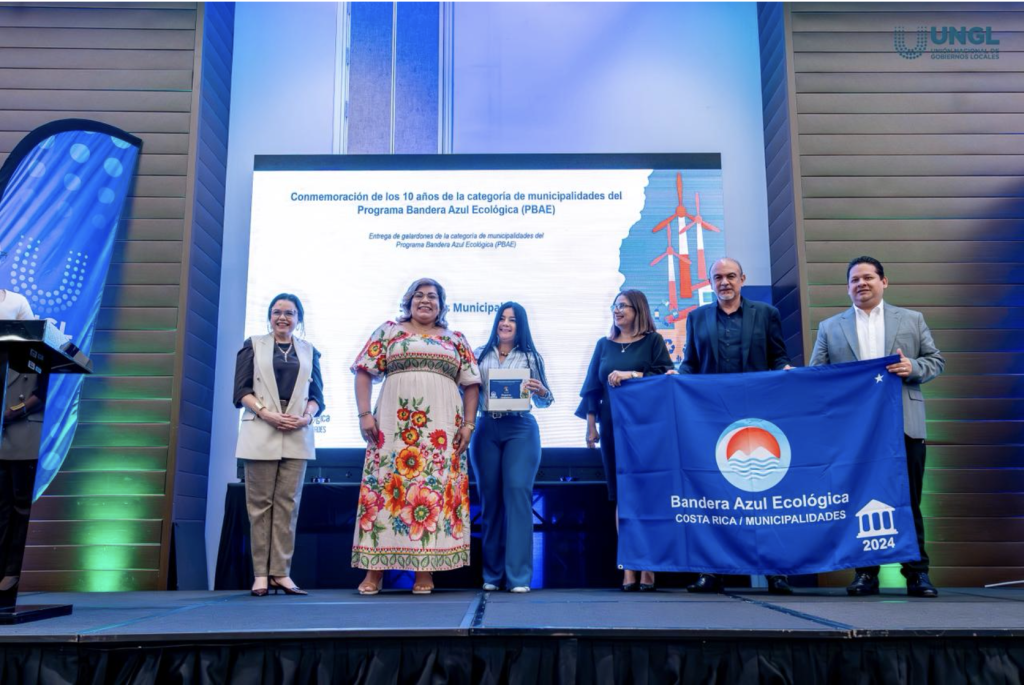
On Nov. 24, the Municipality of Pococí was one of 23 local governments to receive the 2024 Ecological Blue Flag, an award given to councils that have made an effort to demonstrate their environmental commitments.
In the hands of private management
Most recycling in this canton is carried out by private managers and collection centers such as Hogar Betel, Reciclaje Girasol, and Reciplanet, the latter of which operates in the district of Guácimo.
Hogar Betel, located in Pococí, operates a collection, sorting, and marketing center for recyclable materials in conjunction with the municipality.
The income generated by Hogar Betel is entirely dedicated to maintaining a shelter for homeless people in the area. The shelter provides housing, food, clothing, and spiritual support to this population so that, during their six-month stay, they can build sustainable life skills that allow them to become self-sufficient and independent.
One of the limitations this organization faced was insufficient physical space to store the rigid HDPE and LDPE plastics. After receiving and approving their request for support, the Embassy of the Federal Republic of Germany in Costa Rica granted them the necessary funding to acquire a plastic shredder, which facilitates the storage and transport of the material, increasing the value of the final product.
Reciclaje Girasol is associated with the recycling company Recyplast. Located in Siquirres, Limón, it’s one of Recyplast’s many collection points nationwide, most of which are run by female heads of household, for recycling plastics and other materials.
Finally, Reciplanet is a local recycling initiative, part of a larger effort to strengthen collection points in Costa Rica, especially in rural areas. It partners with companies such as Recyplast and ecoins to receive recyclable materials such as plastic, paper, and cardboard, operating under a model that supports female heads of household and micro-enterprises, aiming to reduce plastic pollution in the country.
Regulation generates opposition
In addition to the difficulties already faced by municipalities across the country in managing garbage and recyclable waste, there is currently opposition to the new regulations for regionalized solid waste management—Executive Decree No. 44974-S—which mandates that municipalities work together.
Municipal governments are resisting the regulations because they argue that the National Environmental Technical Secretariat (SETENA) did not review them and that, without any technical, scientific, or legal justification, the climate variable has not been incorporated into an activity that generates negative effects on the atmosphere, health, and the planet.
Ariana indicated that, according to her local government, this decree is unfeasible, unequivocal, and represents a significant threat to municipal autonomy. The point of contention lies in the deadlines imposed, which are difficult to meet given municipal capacities. For example, requiring 100% of inorganic waste to be disposed of within four years is impossible because most cantons lack the necessary infrastructure, she says.
According to Semanario Universidad, the decree seeks to limit the maximum distance for final disposal to 80 km from the point of generation: “According to the municipalities, the decree does not consider the actual distance between cantons outside the Greater Metropolitan Area (GAM), unless the intention is for each municipality to return to landfills within its own canton.” This measure, according to experts, is not applicable to cantons outside the GAM and exposes them to public health emergencies due to the lack of nearby options. Ultimately, it only generates regulatory challenges and a lack of resources, as in the case of Ticabán.
Semanario Universidad also reported that a group of 15 municipalities and the Ministry of Health called on legislators in October to approve the bill that would transfer the responsibility for granting land-use permits for waste disposal sites or sanitary landfills from the municipalities to the Ministry of Health.
“To determine whether or not it is viable, a technical study is required to assess the situation from an economic and social perspective,” Solis explained.
She explained that, for example, the municipality is not currently implementing any composting systems in the communities: “What we could do is provide guidance or educate people on how to compost using the Takakura method [a composting technique developed in Japan]. Several training sessions were held in organized communities in early 2025.”
In this way, she added, each person can manage it correctly at home.
“For a project to be carried out in a specific community, a request must be received from that community so that a study can be conducted to determine where and under what circumstances it can be implemented,” Solís said.