Tidal forests, the future of Puntarenas: mangroves as an engine of sustainable employment and a coastal shield
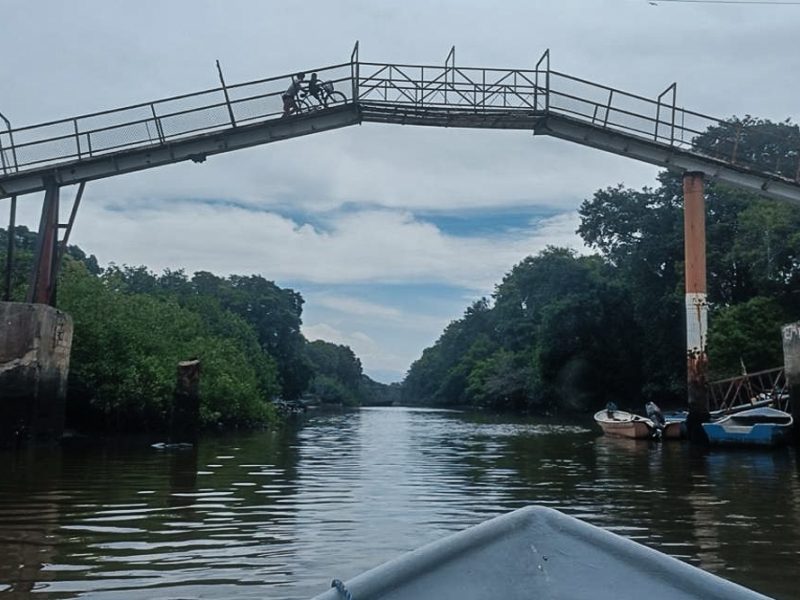
Can mangroves save the economy of Puntarenas? In Fray Casiano, the community is not waiting for permits to protect its “coastal shield.” Faced with institutional abandonment, neighbors and organizations are transforming the mangrove into a motor for sustainable employment and an open classroom.
Fabricio Obando Chan reports the story in this article created with a grant from “Journalism in Times of Polarization,” a project of the Latin American Solutions Journalism Fund. The Fund is an initiative of El Colectivo 506 in alliance with the SOMOS Foundation.“Journalism in Times of Polarization” is made possible by the support of the Canada Fund for Local Initiatives. The Canada Fund for Local Initiatives—administered by the Embassy of Canada—funds small-scale, high-impact projects aimed at empowering vulnerable communities and populations and promoting human rights for all people.
The article was published by Puntarenas se Oye on Jan. 5, 2026. It was adapted and translated here by El Colectivo 506 for co-publication. We used Google Translate to support the translation.

Puntarenas is a magical place where the ocean waves converge, filling the hearts of its residents with joy, and where our grandparents danced to the rhythm of the waves.
But Puntarenas is more than that, because along its shores lies a treasure that almost no one knows about: the mangroves. This marvel is an important part of the environment and also of this beautiful pearl of the Pacific. There, you can find stories that enrich the region’s cultural heritage.
Furthermore, various initiatives are allowing people to discover this wonderful place, generating employment for locals, and, above all, making them guardians of this treasure.
What’s a mangrove?
According to the Dictionary of the Royal Spanish Academy, the word mangrove means “land in the tropical zone covered by water during large tides, full of estuaries that cut through it forming many low islands, where trees that live in salt water grow.”
Data related to the Puntarenas mangrove and surrounding areas in the Management Plan for the Puntarenas Estuary Wetland and Mangroves, prepared by the Central Pacific Conservation Area (ACOP) and the National System of Conservation Areas (SINAC) in 2018, indicate that 61% of the surface area of the Protected Wildlife Area (ASP) of the Puntarenas Estuary Wetland and Associated Mangroves (HEPyMA) consists of mangroves.
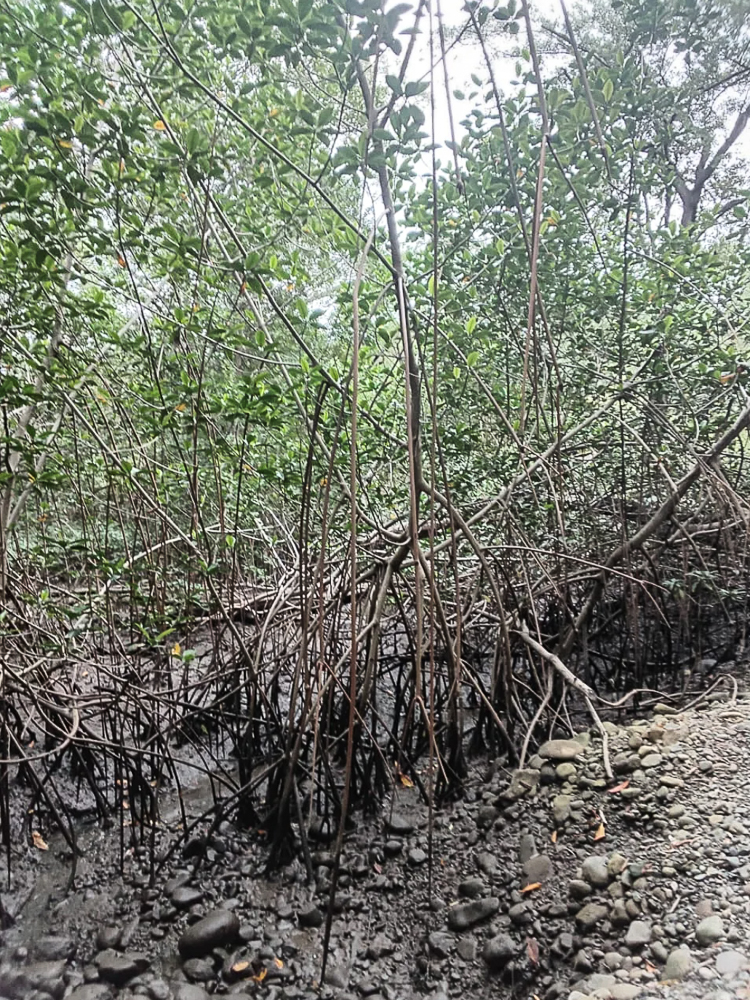
This ecosystem is composed of several mangrove species, including:
Red Mangrove: Rhizophora mangle and R. racemosa.
White Mangrove: Laguncularia racemosa.
Black Mangrove: Avicennia germinans and A. bicolor.
Pelliciera rhizophorae.
Button Mangrove (Conocarpus erectus).
Ignorance: the enemy of the mangrove
Students Alonso Agüero Blandón and Angélica García Valladares, from the sociology program at the University of Costa Rica, presented the results of an investigation called “Ignorance: enemy of the mangrove,” in which they highlighted the importance of educating the population on this topic.
According to Alonso, the university study revealed that the mangrove is an essential ecosystem for the local economy (shellfish harvesting and tourism) and a “natural breakwater.” However, it faces serious threats from pollution and a lack of awareness and knowledge.
Angélica added that the mangrove “is much more than a collection of trees and roots; it is an ecosystem of paramount importance” for the life and economy of the coastal communities of Puntarenas, serving as a cornerstone for the harvesting of commercial shellfish such as piangua clams, tourism potential, and the natural protection of the coast.
Both highlighted that mangroves provide tangible benefits that are felt in daily life. The most direct and well-known is the harvesting of mollusks, such as pianguas (a type of clam), a commercial activity and one for personal consumption that remains active.
Furthermore, the researchers emphasized other ecological functions of mangroves:
- Coastal protection: It acts as a natural breakwater, benefiting nearby communities by mitigating the impact of waves and weather events.
- Biodiversity: It is a crucial habitat for diverse flora and fauna, including species of tourist interest such as birds and crocodiles.
Knowledge about the mangroves in Puntarenas is often innate and passed down through close proximity. People know them from living nearby and interacting with them from a young age, rather than through workshops or formal education. However, this knowledge tends to be less technical.
“People who live there know they can go and harvest piangua clams. But they don’t know the minimum size required to harvest them for sale,” explained Angelica, highlighting the gap between practice and regulations.
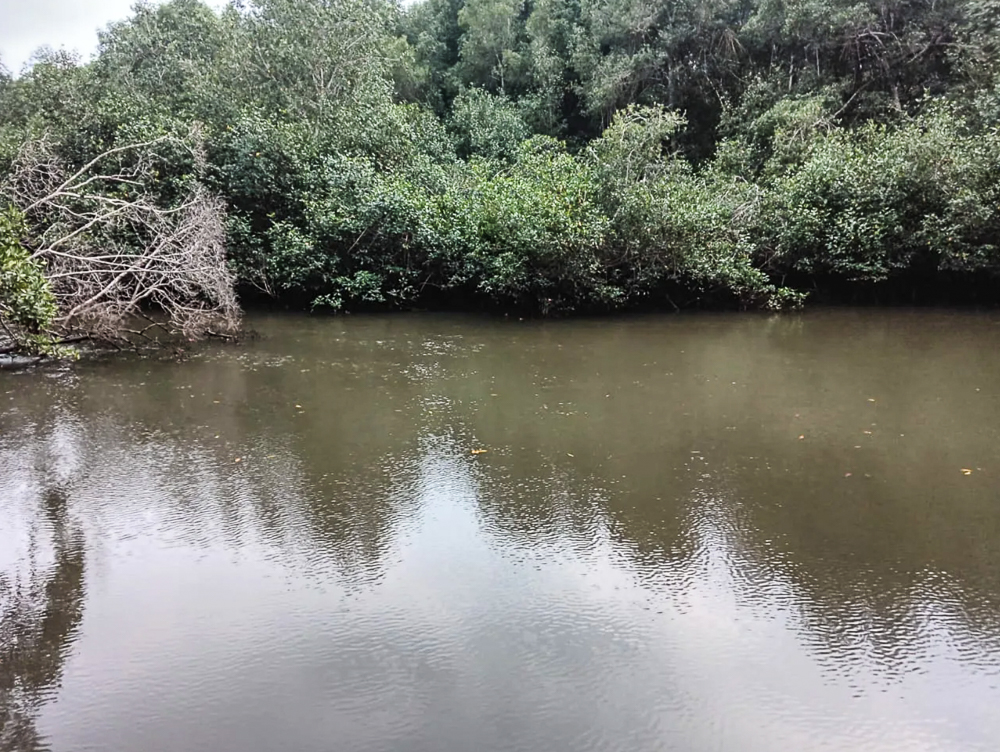
Threatens that affect the mangroves
According to the sociologists’ research, the most visible and worrying problem facing the mangrove is pollution from solid waste, originating from both the surrounding community and more distant areas.
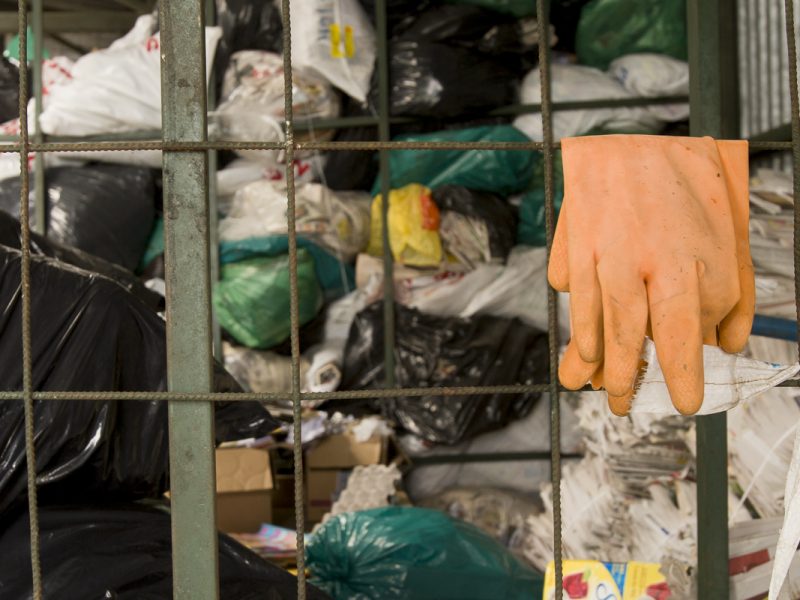
The report indicated that, during clean-up campaigns, the most frequently collected items are plastic and glass bottles that often become entangled in fishing gear, as well as bulky waste such as old sofas, stoves, washing machines, and refrigerators in certain areas.
Furthermore, indirect damage caused by rainfall was identified, as trash carried by rivers from more distant neighborhoods inevitably ends up in the mangrove or the sea. Those surveyed in the university research also indicated the need for greater municipal support in collecting the waste gathered during the clean-up efforts.
Fray Casiano, the community that reduced mangrove pollution by 80%
The residents of the Fray Casiano community, located in the central canton of Puntarenas and belonging to the Chacarita district, have dedicated themselves to protecting the mangrove forest.
On Nov. 28, 2025, community members received training on mangroves and their conservation at the Juan Bertoglia Richards Marine Biology Station of the Universidad Nacional de Costa Rica.
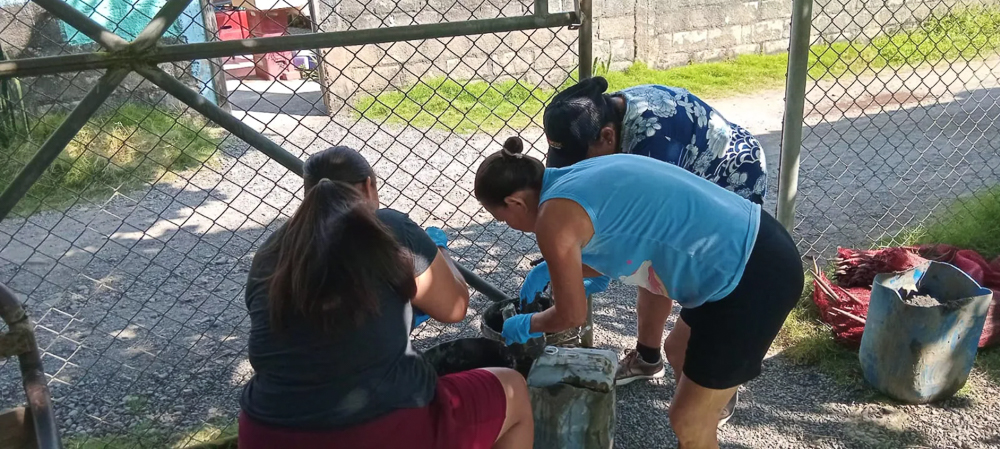
José Alberto Sánchez Castillo, a resident of Fray Casiano and member of ASOPRENSO, was present at the event and spoke with Puntarenas Se Oye about the work they are doing to conserve the mangroves.
“The importance of this ecosystem is immense. Numerous families depend on shellfish harvesting for their livelihood. Furthermore, considering the confluence of many rivers in the upper reaches, the mangrove plays a crucial role as a natural and protective barrier between the estuary and the surrounding communities,” José Alberto stated, referring to the mangrove’s importance to the residents of Fray Casiano.
At a social level, the mangrove has incalculable value. He pointed out that, although regulations prohibit resource extraction in the area, “many people still go to the mangrove to fish for their daily sustenance.” The community leader concluded by emphasizing the ecosystem’s deep roots: “The mangrove has always been there; it will always be a fundamental part, I would say, of all our communities, especially in Gran Chacarita.”
José Alberto added that the ecosystem has faced serious challenges for decades. Specifically, he mentioned that “in the 70s and 80s there was indiscriminate logging due to coal mining,” which represented the first major historical problem. However, this problematic practice has now been eradicated.
The environmental problems in the area are exacerbated by the overpopulation observed in the areas adjacent to the mangrove. This situation is of great concern, as it causes many community residents to dump their waste directly into the estuary and the mangrove ecosystem.
It is precisely in response to this challenge that ASOPRENSO intervenes. This association, with a clear environmental focus, is dedicated to the removal of waste discarded by the communities themselves, acting as a crucial mitigation against the direct pollution of the ecosystem.
ASOPRENSO, an ally in caring for the mangroves
“The Association for the Protection of Natural Resources (ASOPRENSO) was founded three years ago, but some of our board members have experience in environmental issues dating back to 2015,” José Alberto explained. “In fact, from 2015 to the present, we have reforested or planted more than 100,000 mangrove seedlings. We have involved local schools, children, and ordinary people from the community.”
This initiative is currently funded by the Universidad Nacional, although previously, support and funding had been practically nonexistent. Community members managed to carry on with their mission to protect this natural treasure of Puntarenas thanks to bingo games and raffles.
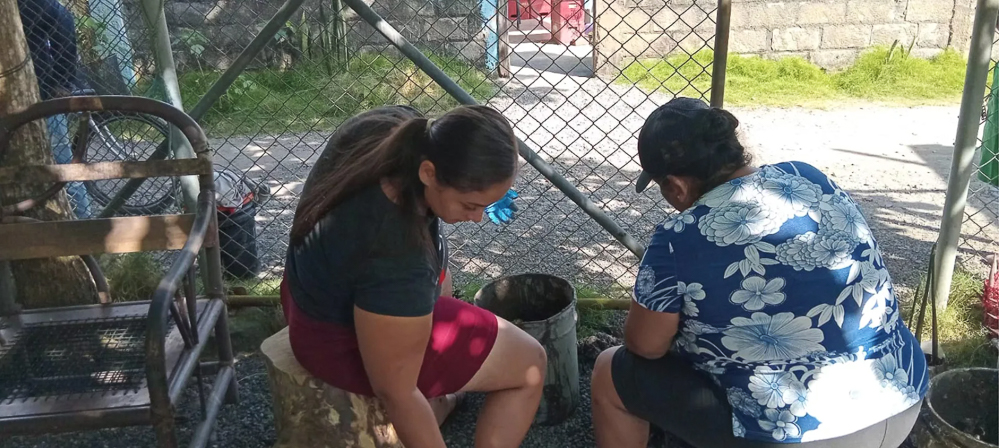
“This project has tangibly improved the quality of life for the locals,” stated José Alberto. To illustrate the change, he detailed the reduction in collected waste: “When we started ten years ago, we easily extracted between 500 and 700 kilos of waste in a two-hour campaign. Today, we work three- to four-hour days, and the most we extract is 100 or 150 kilos.”
This reduction, in his opinion, demonstrates a notable improvement in community awareness. However, he concluded that “it could still improve, but for that, we have to continue working together.”
José Alberto says the primary obstacle has been the Ministry of Environment and Energy (MINAE) and the National System of Conservation Areas (SINAC)—because their support has been nonexistent.
“For us, they’ve actually been an obstacle, because they tell us we can’t plant or reforest without their permission. But imagine, if we were waiting for that permit, it would have been 10 years and we wouldn’t have done anything,” he said. “I feel that, although it doesn’t sound good, these two institutions that deal with environmental issues concerning forests and mangroves have actually been an obstacle.”
Puntarenas se Oye contacted the Ministry of Environment and Energy and the Central Pacific Conservation Area (ACOPAC); however, we did not receive any response regarding the issue of mangroves in Puntarenas.
Community support will always be important. You can’t work alone, without the active participation of the community.
“Bringing the community together, seeking the support of schools, colleges and kindergartens, and from there, starting to instill in students the importance of beginning to work on the protection of mangroves,” said José Alberto.
“Mangrove reforestation could be significantly improved if we were able to coordinate with government agencies such as SINAC or MINAE. In 2015, we worked successfully with them, establishing nurseries and reforesting important areas. Unfortunately, a change in government interrupted that collaboration, forcing them to continue independently, which underscores the critical need for institutional support,” he added.
He points to a clear concern regarding the current government’s environmental agenda, which has had a direct impact on coastal restoration projects.
“Essential programs like ‘Manos a la Obra’ (‘Let’s Get to Work’) from the IMAS [Costa Rican Social Welfare Institute] and others from the Ministry of Labor that funded crucial activities such as cleaning estuaries and beaches and reforesting mangroves have been eliminated,” he says.
These funds have now been redirected to youth employment programs like ‘Empléate.’ The main criticism lies in the government’s perception: “The government considers reforestation and cleanup to be unproductive, despite their immense environmental importance and their vital role in protecting against coastal erosion,” José Alberto said.
“In 2015, we worked successfully with them, using nurseries and reforesting deforested areas,” José Alberto stated. However, the collaboration was interrupted by a change in administration, forcing local initiatives to continue independently, which underscores the critical need for institutional support.
Lessons learned from planting
Despite the lack of funding, the experience accumulated over the years has allowed community leaders to refine planting and nursery management techniques.
The importance of timing in the process has been identified, with specific planting seasons in summer and winter. This helps prevent both seed shortages and the erosion of young seedlings by river floods.
“Traditionally, we establish a nursery in December, and the community is notified about the reforestation areas to ensure their care and success,” José Alberto concluded, emphasizing that local knowledge is the cornerstone of the effort to restore this ecosystem.
Environmental education as a future strategy
Universidad Nacional researchers agree that the foremost challenge is education, especially aimed at young people.
Although there is a contrast between the perceived disinterest and the actual participation of young people in clean-up groups, there is a consensus that education must be multisectoral.
Experts identified the need for collaborative work among families, schools, the Municipality, and other institutions to give talks and raise awareness of the importance of the ecosystem.
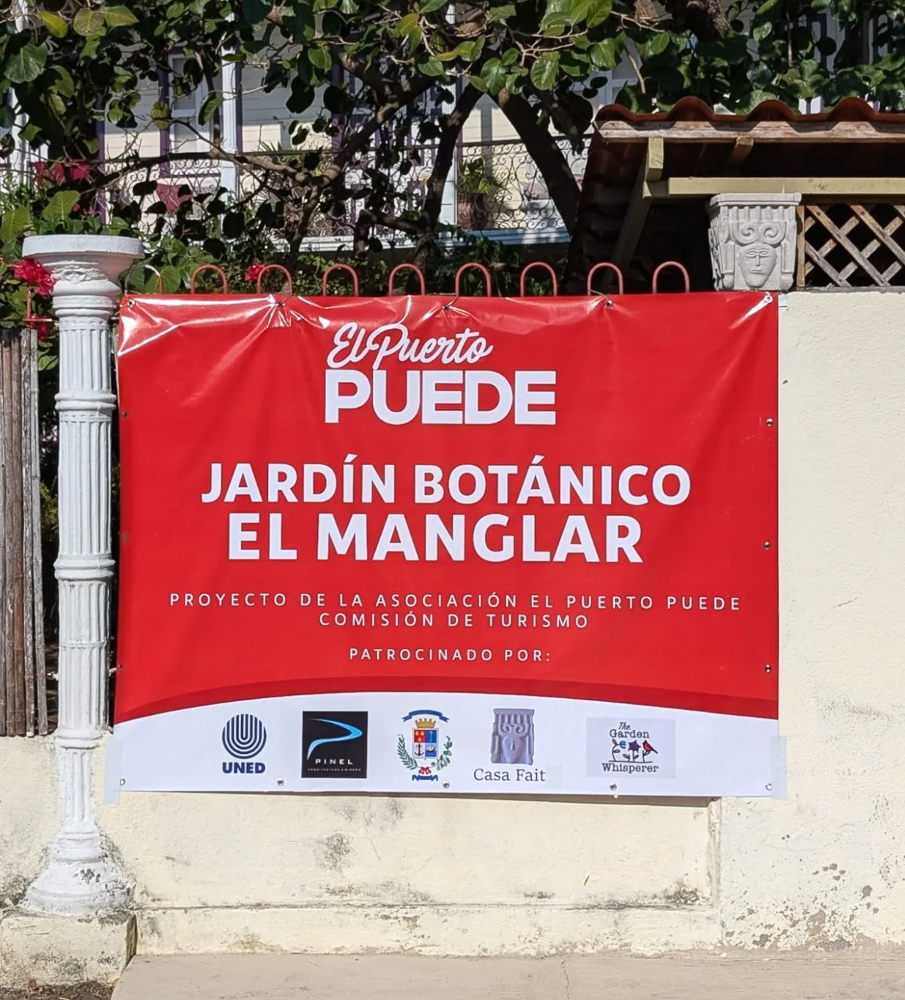
El Puerto Puede: an organization working to protect the mangroves
Another important mangrove protection initiative comes from the Puntarenas-based group “El Puerto Puede,” which organized itself as an association to not only restore the landscape but also bring hope to the central canton of Puntarenas through the El Manglar Botanical Garden. This project stands as a model of urban renewal designed to transform vulnerability into resilience.
The challenge: overcoming the crisis of neglect
The city has experienced a significant decline in its economic dynamism. Critical factors have converged to create an urgent situation:
- Fishing restrictions: The local economy, historically linked to the sea, has suffered from the limitations imposed on this activity.
- Institutional displacement: The relocation of government offices outside the Central District has reduced the flow of people and commercial activity.
- Perceived insecurity: Unmaintained public spaces have become hotspots for crime, facilitating criminal activity and social disorder.
Given this scenario, the revitalization of strategic areas is essential to guarantee security and improve the quality of life for residents. The information provided is from a document prepared by the El Puerto Puede Association.
A proposal to reclaim public space
El Manglar Botanical Garden proposes a direct solution: reclaiming an abandoned public space overlooking the iconic Estero and transforming it into a multi-use park and garden. This is not simply an ornamental project. It is a revitalization strategy for the direct benefit of the residents of the central canton and the surrounding communities, according to a document prepared by Puerto Puede regarding the Botanical Garden.
The primary objective is to convert this urban void into a dynamic meeting point that simultaneously serves for recreation, culture, and environmental education.
Mangroves as an engine for economic revitalization
For Puntarenas to regain its luster, it needs infrastructure that acts as a magnet for visitors. The project addresses this need from several angles:
- Attracting tourists: By creating a safe and visually stunning space, it is expected to increase the number of visitors to the city center.
- Impact on commerce: The increased foot traffic directly benefits Puntarenas’ commercial center, boosting local businesses.
- Local identity: By highlighting the beauty of the mangroves, the sense of belonging is strengthened, and a unique nature-based tourism product is created.
Environmental education: the shield of the future
The solution offered by the Botanical Garden goes beyond the economic; it delves into education. Mangroves are, essentially, a coastal shield, and their preservation depends on public awareness.
The project seeks to provide education on the ecological importance of these tidal forests, raising awareness among the population about environmental conservation through direct experience. It is envisioned as an “open classroom” where residents and tourists can coexist in a protected, safe, and accessible natural environment.
A symbol of resilience
El Manglar Botanical Garden represents a paradigm shift for Puntarenas. It is proof that, through strategic planning and the appreciation of natural resources, it is possible to transform a source of insecurity into an engine of development. This project not only protects the ecosystem but also safeguards the future of Puntarenas families, giving them back a space of peace, culture, and prosperity.
An ecosystem in crisis
In 34 years, mangroves in Costa Rica decreased by 42%. In 1979, our country had 64,452 hectares of mangroves; by 1995, this had decreased to 51,361 hectares; and by 2013, the mangrove area covered only 37,420 hectares of national territory.
The current state of mangroves is included in the 21st State of the Nation Report. This analysis was based on data from the Fifth National Report to the Convention on Biological Diversity, submitted jointly by SINAC and MINAE in early 2014, and from the project “Valuation of ecosystem services and climate change mitigation potential in the mangroves of the Gulf of Nicoya,” implemented by the Climate Change and Watersheds Program of the Tropical Agricultural Research and Higher Education Center (CATIE).
Both studies identified burning, logging, encroachment, pollution, erosion, and infrastructure development as factors contributing to mangrove loss, but also indicated that other factors such as rising sea levels and storm surges are also exerting pressure.
“Although by law mangroves are public areas with state protection and their occupation is prohibited, the growth of sugarcane, African palm and rice crops, the cutting of trees to take advantage of their wood or urbanize land, as well as inadequate management of fisheries and sedimentation due to poor land use in the upper part of certain basins, have seriously endangered the mangroves of the province of Puntarenas,” the document states, citing the Sinac-Minae report.
“The fragility of these ecosystems not only affects the recovery of forest cover, but also negatively impacts their capacity to produce organic matter, support diverse fauna (fish, mammals, birds, invertebrates, and insects), and serve as a carbon sink for greenhouse gases,” the study adds.
The CATIE report, cited in the document, recommends promoting initiatives and policy frameworks that support mangrove restoration in Costa Rica.
“Recent community development and ecological restoration projects led by Conservation International in the Gulf of Nicoya demonstrate the essential involvement of local communities in all these processes,” it concludes.
Author