Women sustain the culture of Cañas, but what is needed for them to also make decisions?
In Cañas, Guanacaste, women are a driving force that keeps traditions like the traditional mascarada—a traditional papier-mâché mask parade— alive. However, although groups like Las Mascareras and Cañas ProCultural uphold local identity, their voices are often left out of the discussions about budgets and public policies. How can women’s cultural leadership move from volunteer work to direct influence?
Journalist Dione Nohelia Guzmán Segura reports the story in this article, created with a grant from the “Journalism in Times of Polarization” project of the Solutions Journalism Fund in Latin America. The Fund is an initiative of El Colectivo 506 in partnership with the SOMOS Foundation, and carries out this project thanks to the support of the Canada Fund for Local Initiatives. The Canada Fund for Local Initiatives—administered by the Embassy of Canada—funds small-scale, high-impact projects aimed at empowering vulnerable communities and populations, and promoting human rights for all people.
The story was published by La Voz de Guanacaste on Dec. 29, 2025. It was adapted by El Colectivo 506 for co-publication. We used Google Translate as a translation tool.

In Cañas, women sustain and energize community processes that keep the canton’s culture alive. For the past three years, Cañas ProCultural has been promoting initiatives, mapping, and cultural activities through artistic collaboration to strengthen local identity.
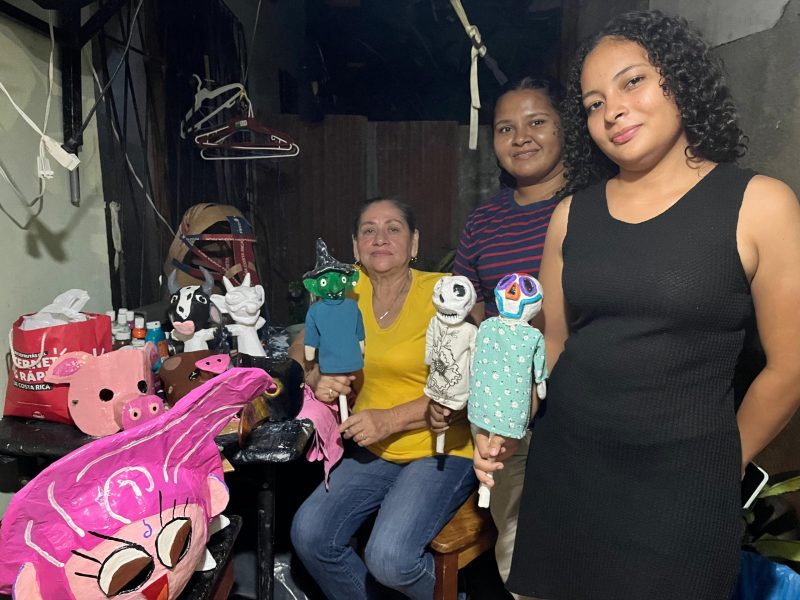
In a neighborhood house, five members of Las Mascareras de Cañas mold and paint the traditional masks that for generations have given the canton its face.
Despite the lack of stable support, these initiatives maintain a cultural legacy. Today, they demand greater institutional recognition and a real voice in local decisions about the direction of culture in the canton.
“Women’s leadership isn’t fully influential in the community, even though many community struggles are led primarily by women,” says Sheyla Santana, co-founder of Cañas ProCultural.
For both groups, limitations are a constant: lack of funding, the absence of support from state institutions, and poor coordination among organizations in the canton.
All of this leads to a bigger problem. Female cultural leadership sustains most processes, but is rarely part of local decisions. It’s absent from the tables where budgets are defined, projects are approved, and the direction of local cultural policy is decided.
Las Mascareras de Cañas comprises five women who have been working since 2023 on the creation of traditional masks through workshops in communities in Cañas.
Cañas ProCultural has dedicated itself to researching, managing cultural spaces, and promoting political oversight, as well as bringing together cultural workers. This group was formed in 2022. Since then, it has participated in festival productions, cultural management, and the sociocultural mapping of a directory of artists and cultural workers in the canton.
According to Las Mascareras de Cañas, they have sought opportunities to be included and participate in activities within the canton. The group states that they requested support and assistance through a letter addressed to the municipality—asking, for example, to collaborate in fairs or celebrations in the canton, and to establish effective communication with the local government, says member Alondra Arias Barberena.
However, the members say that they often do not receive a response from the Municipality of Cañas or are not taken into account for activities in the canton, which they believe limits their growth and visibility.
“To be more influential, I feel that more than anything, support is needed. They need to provide more guidance so that women can get ahead,” says Ihonancy Briceño Álvarez, a member of Las Mascareras.
According to Alonso Achío Rodríguez, a social management official at the Municipality of Cañas, one of the main obstacles to strengthening local culture is the lack of structure within the municipality. A clear example of this is the absence of a cultural management office in Cañas.
The official says that the lack of specialized personnel has direct consequences for those who uphold the canton’s traditions.
“If there were a cultural manager, they wouldn’t be sidelined,” Alonso adds.
He states that the Social Management Area provides support to women leaders, especially entrepreneurs, but not with a specific focus on cultural aspects.
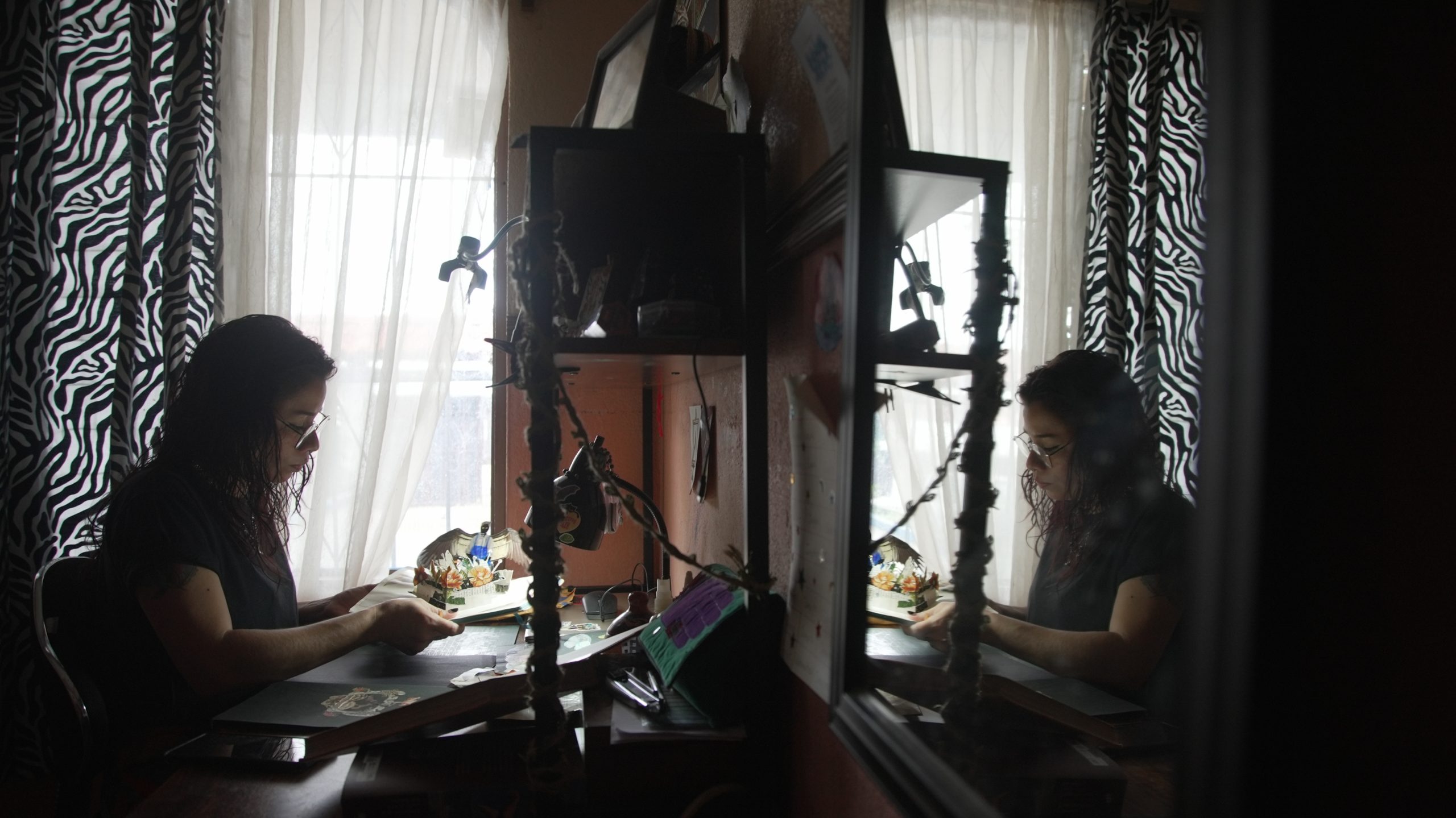
Preserving cultural wealth
“We do this out of love. We meet every afternoon to make masks,” says Floribeth Mora Jiménez, a member of Las Mascareras de Cañas. “We don’t want our culture to be lost; we have to teach children that traditions must continue.” The group has offered mask-making workshops for children in the canton.
Cañas ProCultural maintains that same commitment. According to its co-founder, Sheyla Santana, their unpaid work stems from “necessity and survival.” Not their own, but the need for and survival of spaces for artistic and cultural development.
“To survive, we have to create them,” Sheyla Santana states firmly.
And that commitment is palpable at the institutional level. Nayubel Montero Jiménez, the Sociocultural Manager in Guanacaste, affirms that women are the most involved in sociocultural promotion groups.
“A large part of the population we work with is through organizations led by women,” she says, adding that coordination and support are key, but require changes in local and central government policies.
Nayubel explains that strengthening women’s cultural leadership requires not only occupying spaces, but doing so accompanied by people and organizations that understand their struggles and know when to offer support, without creating division.
“We need to gain ground, but we also need to build alliances with people who can understand these struggles,” she says.
According to a report by UNESCO, “Gender Equality: Heritage and Creativity,” women continue to face significant barriers to accessing decision-making positions within the cultural sector. As the organization’s then Director-General, Irina Bokova, noted: “We must do more to harness culture for women’s empowerment.”
Nayubel explains that it is crucial to recognize the contribution and social value of the work that women do in the communities and “understand that without these women dedicating themselves, the dynamic does not work.”
“For this leadership to have a positive influence on the community, there first needs to be a reform of the Municipal Code,” said Sheyla Santana of Cañas ProCultural. She states that no article in the Municipal Code establishes specific laws regarding culture.
“The only article that mentions anything is Article 4, which only makes direct reference to musical training, and even then we don’t see it respected in practice,” Sheyla adds.
While the culture of Cañas continues to live on thanks to community efforts, the women who sustain it demand more than symbolic recognition: to stop being just behind the scenes and finally occupy a place in the decisions that define the cultural path of the canton.
The masks, the workshops, and the community processes exist because women continue to sustain them. From that same drive arises their greatest demand: that their work, and not just their presence, have a real impact on what’s to come. Their challenge now is to transform that effort into a force that guides the cultural future of the canton.
Author