

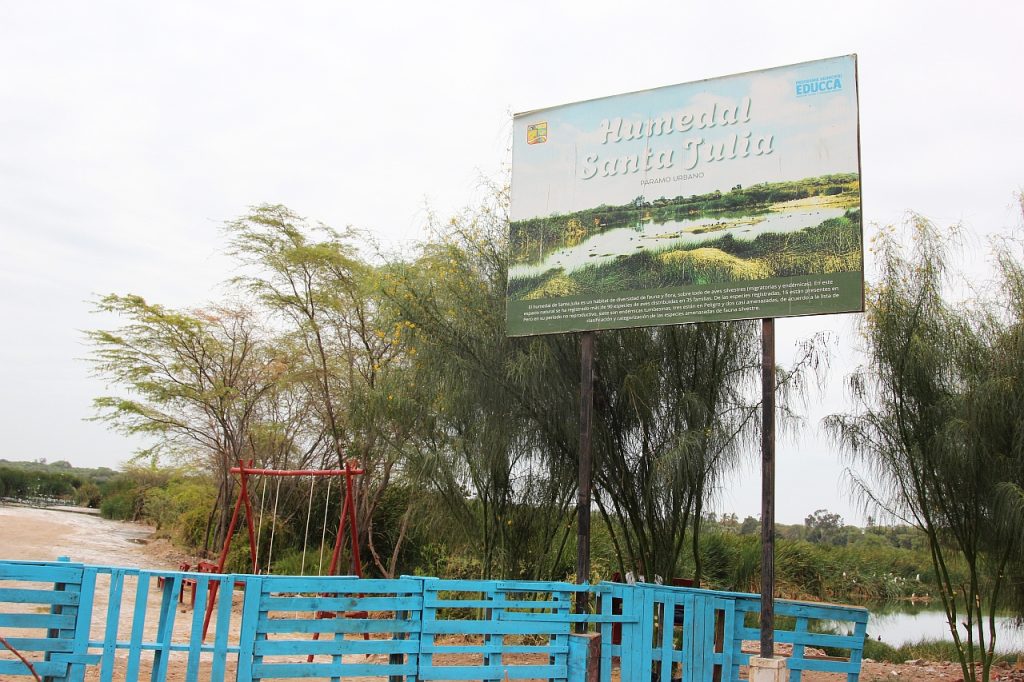
In the arid landscape of Piura, Peru, where the sun seems to never rest and dust covers the streets of the Veintiséis de Octubre district, an ecosystem of approximately 17 hectares survives.
Journalist Scarlet Timaná Zapata tells its story in this piece, made possible with the support of the Earth Journalism Network, through the Latin American Solutions Journalism Fund, an initiative of El Colectivo 506. It was published by Norte Sostenible on November 21, 2025, and has been adapted and translated by El Colectivo 506 for co-publication. ChatGPT was used to create the first draft of the translation.

Marco Antonio Gutiérrez was just over thirty years old when he saw the Santa Julia wetland begin to die.
The water was covered with debris, trucks dumped garbage uncontrollably, and the air grew heavy. No one seemed to notice this hidden space among the sand dunes: it was just another dump. One day, tired of the neglect, he decided to act, and what seemed like a small gesture eventually became an act of resistance.
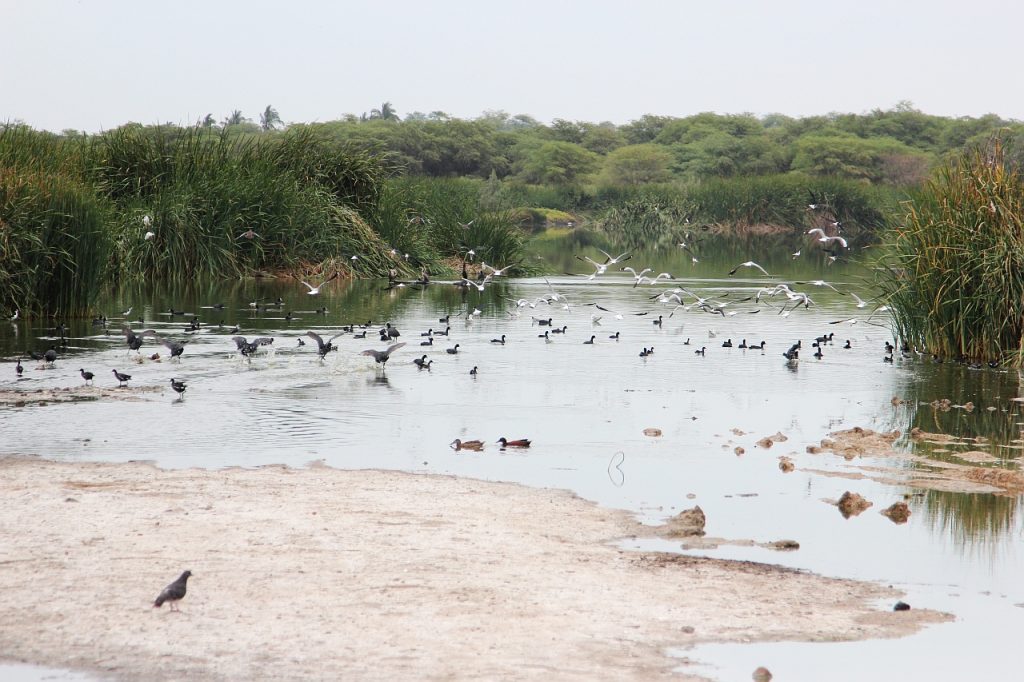
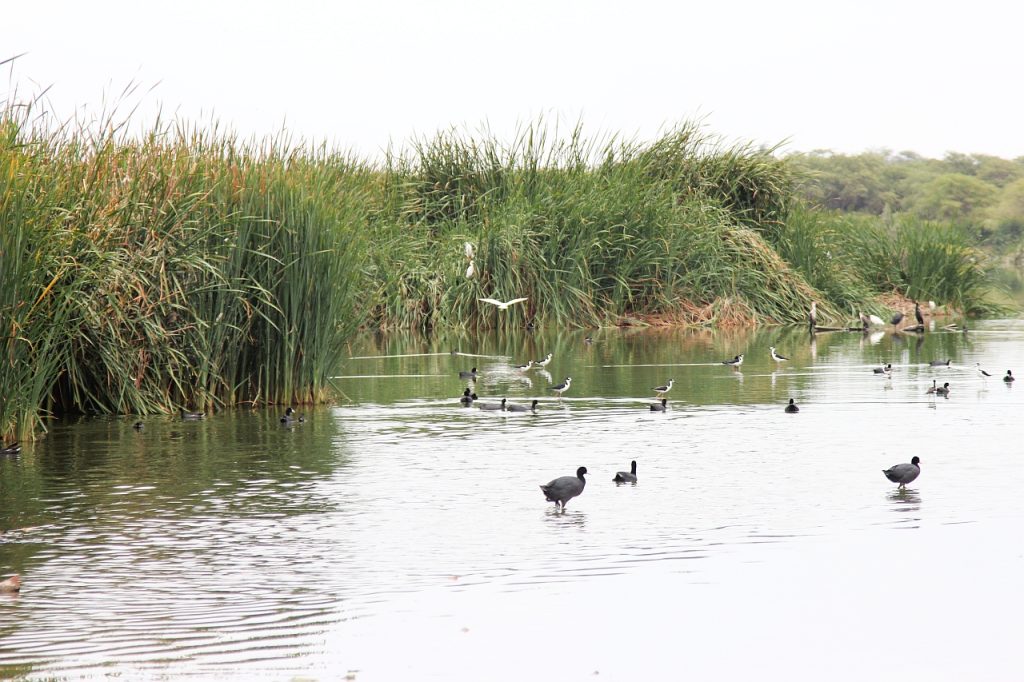
Surrounded by the human settlements of Santa Julia, Jesús de Nazareth, and Nuevo Horizonte, as well as by the Kurt Beer municipal ecological park, this wetland is an oasis of life amidst concrete and functions as a natural rainwater drainage system. However, its value transcends the functional: it is a refuge, nesting point and food source for more than 90 species of birds—both resident and migratory—distributed among 35 families.
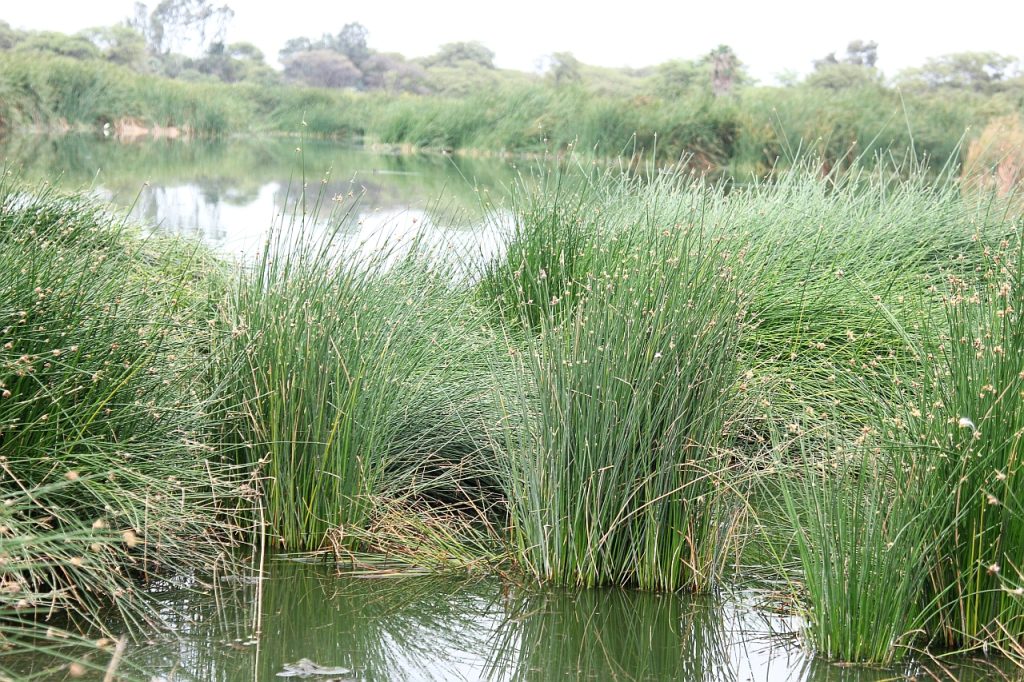
Among its birdlife are seven endemic species from Tumbes, and crucially, some listed as endangered. These include the emblematic Peruvian Plantcutter (Phytotoma raimondii), a bird endemic to the northern coast that struggles to survive. The ecosystem, dominated by totora reeds, or cattails, and rushes, not only harbors life but also protects it. It acts as a natural lung, regulating the local microclimate and sustaining a green oasis amidst urban sprawl.
Saving an ecosystem depends not only on a decree or the will of its inhabitants. True resilience—the kind that survives neglect and decay—is created when the law and the community learn to listen to each other. In the arid heart of Piura, a wetland that was once a landfill is being reborn as a model of sustainable management thanks to the convergence of two forces that rarely align: official protection, and the human fabric that refuses to surrender.
This is the story of how they both learned to breathe together.
The wounds of abandonment
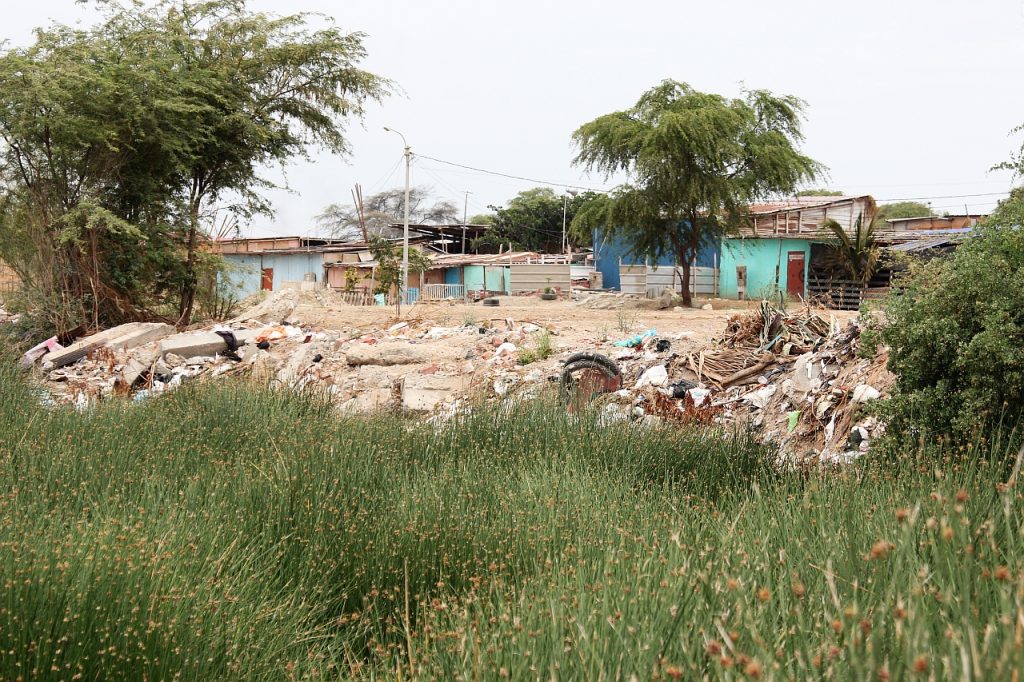
For years, Santa Julia was a degraded area. The accumulation of waste, encroachment, and the indiscriminate harvesting of totora reeds threatened its existence. Stagnant water and neglect transformed the wetland into a hotbed of pollution and insecurity.
According to the Ministry of the Environment (MINAM), Peru has more than 18 million hectares of wetlands, 14 of which are recognized as being of international importance under the Ramsar Convention. However, at least 11 of these 14 sites face severe threats such as urban sprawl, extractive concessions, and solid waste.
Of the wetlands identified in the country, only one—Santa Julia—is located within the city of Piura. It formed naturally after the rains of 1983 on a former brickyard site. The clay soil prevented the water from filtering through, and over time, the area became a large lagoon.
The lack of management and urban sprawl led to progressive degradation: the wetland was used as a dumping ground for garbage, construction debris, and runoff from nearby drainage ditches. Despite this, some residents began to notice that, even in the worst conditions, the lagoon was still alive. Among them was Marco Gutierrez, who—along with other volunteers—began organizing cleanup days.
That was when a group of university students became interested in the birds that were timidly returning to the area. Their presence confirmed what Marco already suspected: that mudflat was, in fact, a natural refuge that deserved to be protected.
For the biologist Frank Edinson Suárez Pingo, a biodiversity specialist with the National Service of Natural Protected Areas (SERNANP), urban wetlands are vital.
“They are critical habitats where many species reproduce and rest. In Santa Julia, there are more than 120 species of birds that find refuge there,” Frank points out. He also notes that these ecosystems “function like the air conditioners of cities: they regulate the climate, reduce heat, and prevent flooding. If they didn’t exist, the city would flood much more.”
In addition to its ecological value, Frank highlights its economic and social potential: “If birdwatching is promoted, young people can be trained as guides, and visitors can eat at nearby restaurants. This generates income and motivates people to protect it.”
The turning point came in 2018, when the National Forest and Wildlife Service (SERFOR), together with the Regional Government of Piura and the District Municipality of Veintiséis de Octubre, began the evaluation process to include the wetland in the Sectoral List of Fragile Ecosystems.
The recognition was formalized in 2019 through Executive Directorate Resolution No. 072-2019-MINAGRI-SERFOR-DE, granting the wetland legal protection that guarantees its sustainable management and the responsible use of its resources.
As a result, a Management Declaration (DEMA) was established, adding value to emergent aquatic vegetation. Harvesters must implement best practices in sustainable management; through Forest Transport Permits (GTF), they can join a broader production chain and access fairer trade agreements for the sale of totora reeds.
“The permit is a tool for change,” says Marco Gutiérrez, who holds a management authorization. “It allows us to work with peace of mind, with support, and demonstrate that development can also be sustainable.”
The measure paved the way for an innovative model of sustainable management, where conservation and the local economy are intertwined.
The voices of totora
For Marco, his story and that of the Santa Julia wetland are intertwined. Both withstood neglect, dust, and the unscrupulous glances of those who saw no value in them.
“I’m one of the people who fought hard and stood up against the district municipality and the regional government. They wanted to use it as a [waste] collection center, and I opposed it along with volunteer friends and NGOs,” he recalls.
Every time he sees the herons and coots return, he feels it was worth the struggle.
“When they come back, it’s as if the wetland breathes again,” he says.
Although the wetland had formed naturally, for years it was ignored and left to its fate. However, some refused to let it die. It was only then, during this period of defense and organization, that Marco contacted a group of women harvesters and weavers to give value to the reeds and cattails.
One day, while talking with them, Marco learned that they earned very little for their work. They had no transport permits or documents to validate their trade.
“That hurt me,” he confesses.
It was then that he decided to commit to the formalization and sustainable management of the reeds and cattails.
Their goal since then has been clear: that the wetland not only be preserved, but also provide a decent living for those who take care of it.
Today, thanks to that effort, totora reeds have a new value. They can be sold at a better price to the weavers of Catacaos, and the artisans—like Hilda—dream of seeing their products reach the national market and even abroad.
“We do more than just weave,” says Hilda, while showing a handbag in earth tones.
The declaration of Santa Julia as a fragile ecosystem marked a turning point: it allowed the municipality to pass a protection ordinance and opened doors with the central government and various non-governmental organizations. For the first time, the wetland ceased to be seen as a wasteland and was recognized as a green heart in the middle of the urban desert.
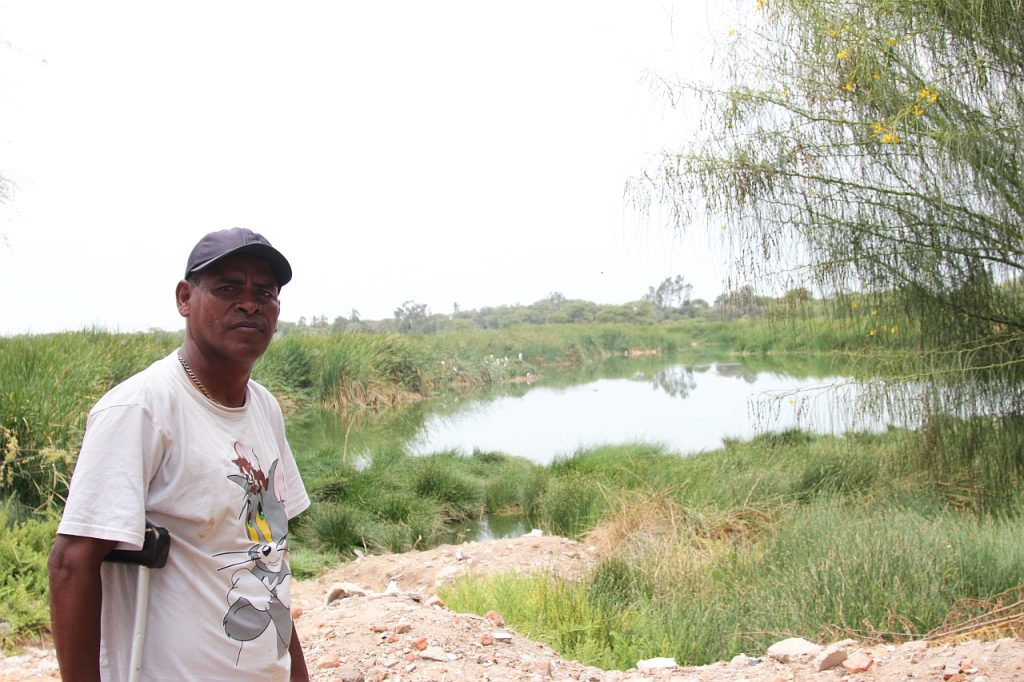
Behind this change is a community that refuses to give up. Men and women who saw beauty where others only saw mud. Marco Antonio—whom many call the guardian of the wetland—has been convinced for over a decade that conservation makes sense only when it improves people’s lives.
The fabric of change
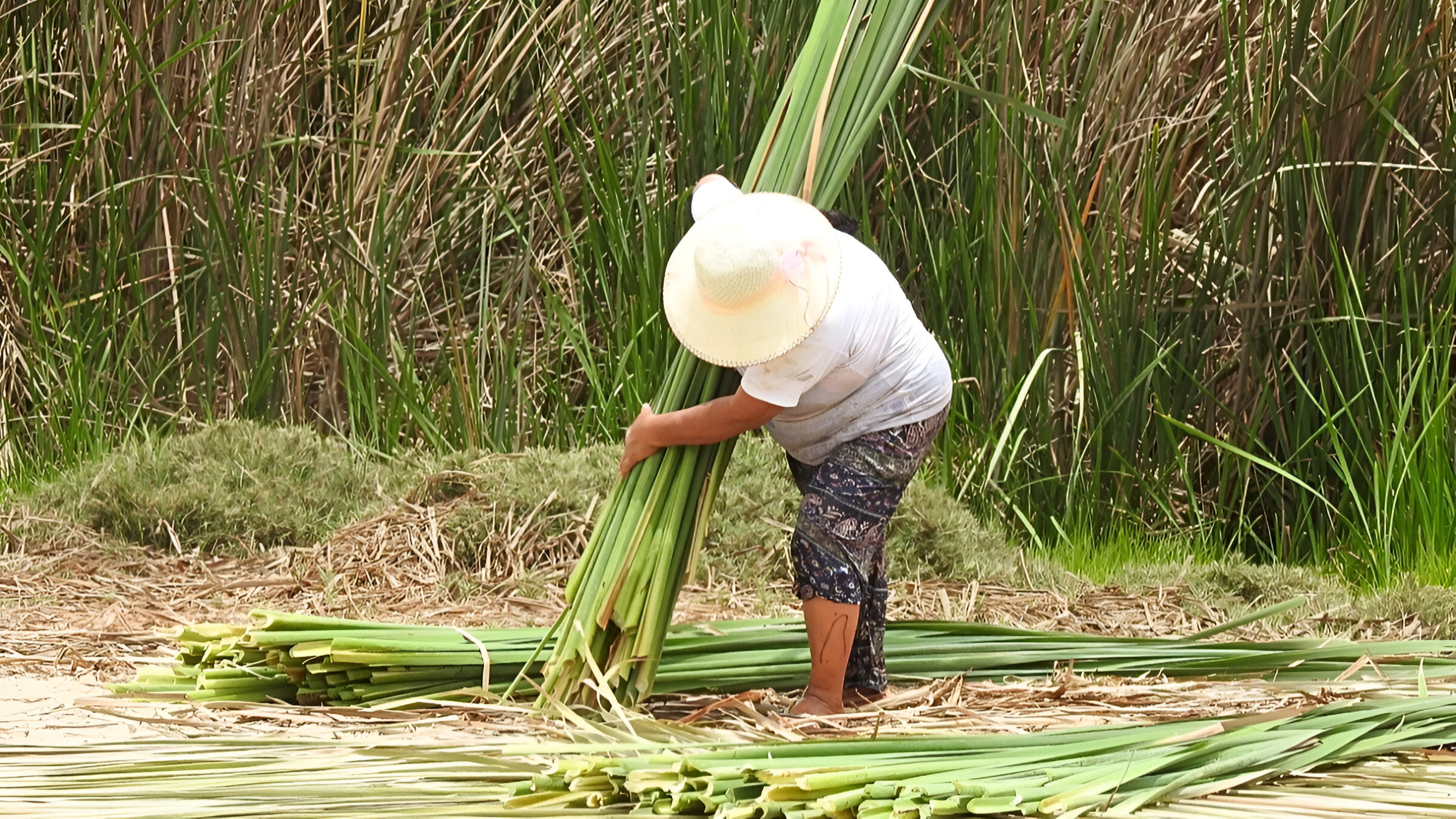
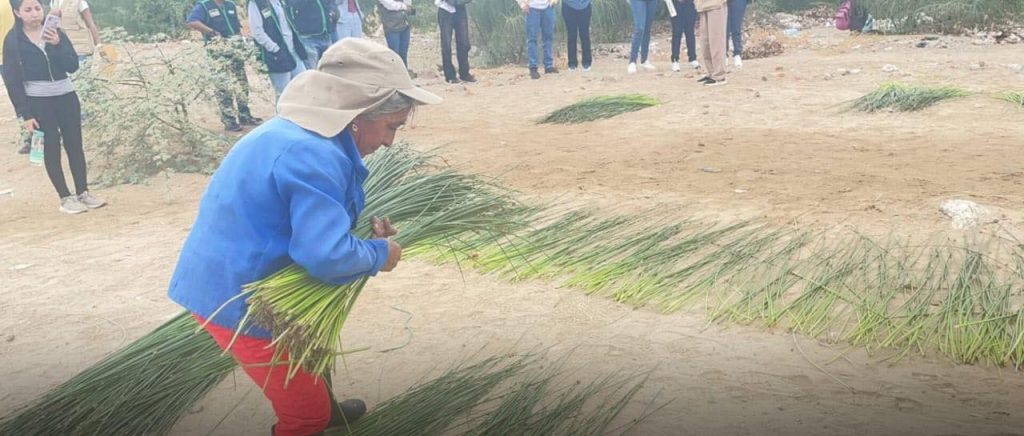
Amidst the water and the reeds grow the fibers that sustain the work of women from La Arena and Catacaos. Marco Gutiérrez organizes them into two groups: harvesters and weavers.
“The women from La Arena are in charge of extracting the reeds and cattails; those from Catacaos, of transforming them into purses, baskets, or lamps,” he explains.
The organization was born from a commitment to valuing women’s work.
“I wanted to formalize their businesses, for them to start working with their products and give them the value they deserve,” Marco says. “Before this, I had the support of the Río Blanco mining company, which helped me obtain the documentation for the management declaration.”
The work is done methodically and respectfully.
“We practice sustainable harvesting. We start with the mature areas and let the rest regenerate,” Marco explains.
Eudocia Chunga Ruiz, one of the harvesters, explains calmly: “When the reeds are green and thin, they can’t be cut. We wait for them to mature, clean them, spread them out in the sun, and then make the bundles.”
Beside her, Felicita Zapata, with a tired voice, adds: “When they no longer have seeds, they’re mature. We cut them, spread them out right there, and let them dry. We harvest twice a year.”
Today, that ancestral knowledge is combined with a modern tool: the Management Declaration (DEMA) granted by SERFOR. Marco considers it a collective victory: “This is a tool for change. It allows us to work with peace of mind, with support, and to demonstrate that development can also be sustainable.”
Thanks to the DEMA, the harvest has traceability and added value. The Forest Transport Guides (GTF) open the door to broader markets and fairer agreements for the artisans. Formalization not only legitimizes their craft, but also restores their pride.
A management model that transcends
The effort to conserve the Santa Julia wetland has begun to receive national recognition. In October 2025, the National Forest and Wildlife Service (Serfor) of the Ministry of Agrarian Development and Irrigation awarded a recognition to the Veintiséis de Octubre District Municipality for its commitment to the sustainable management of this fragile ecosystem, the only one of its kind in Piura that has a comprehensive and participatory management model.
Erasmo Otárola Acevedo, executive director of Serfor, said that Santa Julia represents “a management model that is being built together with two other fragile ecosystems in the country, where the participation of the municipality is fundamental to achieving its sustainability through activities that benefit local populations.”
Despite the progress, Santa Julia continues to face challenges that test its resilience. Invasion attempts persist, variations in the water regime threaten the natural regeneration of the cattails and rushes, and there is still no sustained biological monitoring to assess the real impact on biodiversity.
On the economic front, the artisanal value chain still needs strengthening. The harvesters and weavers seek access to national and international markets without the increased demand jeopardizing the ecosystem’s balance.
To address these limitations, the Territorial Committee for the Integrated Management of the Fragile Santa Julia Ecosystem—comprised of the municipality, SERFOR Piura (National Forest and Wildlife Service), and the Regional Directorate of Agriculture—has developed a roadmap. Among the strategic actions are the creation of a Monitoring Committee, jointly led by the Piura Regional Directorate of Agriculture and the municipality, with the active participation of local neighborhood associations. The plans also include the construction of a bamboo birdwatching platform and the installation of perimeter markers, with technical support from the National Geographic Institute (IGN), to delimit and protect the area.
What Santa Julia needs to survive
From his experience, Marco Antonio knows exactly what the wetland needs: continuity.
“The authorities must continue to request funding every year so that it can be maintained. They can’t let it fall into disrepair,” he pleads.
His dream is that future generations will continue his work.
“They’ll find a foundation already in place, a lookout point, a space for monitoring and birdwatching. They just need to develop it further,” he says.
In the meantime, he continues working with the harvesters and weavers.
“Our project is just beginning,” he says. “They want to learn to weave, but we lack funding. I’m looking for support to continue training them.”
Santa Julia is, in essence, a lesson in how nature and people can rebuild together. Its story reminds us that lasting change isn’t imposed from above: it’s woven from the ground up, by those who choose to care for what others have given up for lost.
And as long as its waters continue to reflect the flight of birds, the wetland will remain more than just a green refuge: it will be proof that, even in the desert, life finds a way to be reborn.