


The coastal community of Santa Teresa, Puntarenas, is a multicultural landscape that has received significant foreign investment. However, are we truly witnessing gentrification or a different kind of social transformation? Explore this report further. Do you believe gentrification is occurring in the district of Cóbano?
Elena Parras reports the story in this article created with a grant from “Journalism in Times of Polarization,” a project of the Latin American Solutions Journalism Fund. The Fund is an initiative of El Colectivo 506 in alliance with the SOMOS Foundation.“Journalism in Times of Polarization” is made possible by the support of the Canada Fund for Local Initiatives. The Canada Fund for Local Initiatives—administered by the Embassy of Canada—funds small-scale, high-impact projects aimed at empowering vulnerable communities and populations and promoting human rights for all people.
The article was published by Santa Teresa Hoy in English on Dec. 23, 2025. It was adapted here by El Colectivo 506 for co-publication.

You arrive in Santa Teresa, sit down at a restaurant, and it is very likely that you are served by a foreigner. When you arrive at your accommodation, you may realize that the owner is of U.S. or Israeli nationality, while the cleaning and maintenance staff are usually Nicaraguan.
At first glance, the mix of nationalities seems to be part of the area’s international charm, but it also raises an uncomfortable question: are we facing a process of gentrification, or simply a tourist destination in expansion?
What does the term “gentrification” really mean? Why did it become popular, and how does it intertwine with the presence of foreign people in Costa Rica’s coastal communities, particularly in Santa Teresa?
It is impossible to understand and explain the answers to these questions without looking at history. And in Santa Teresa, that history has been marked by migration.
A Review of the Historical Context
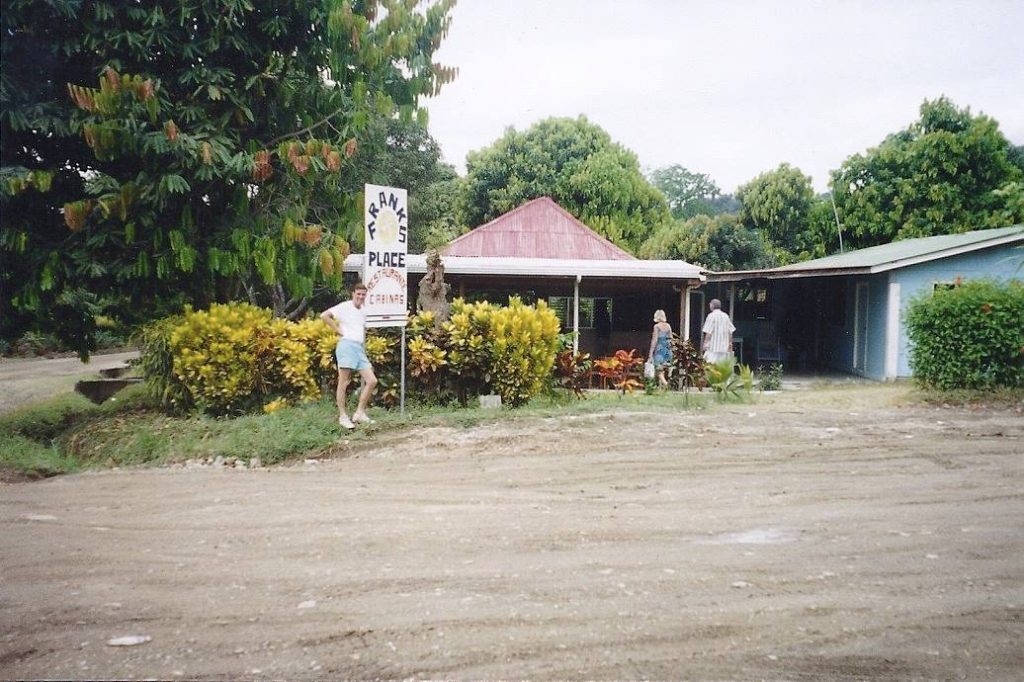
The southern part of the Nicoya Peninsula was practically uninhabited until the 1930s, when people from other parts of Costa Rica, popularly known as cartagos, arrived to work land facilitated by the Costa Rican Institute of Lands and Colonization (ITCO). The population was mainly engaged in agriculture, livestock farming, and fishing. However, development came slowly: electricity arrived in 1996, potable water in 2014, and high-speed internet only in 2017.
From the early 1980s onward, following a deep economic crisis in Costa Rica, governments promoted a series of economic reforms oriented toward economic liberalism, that is, reduced State intervention in the economy. They also encouraged exports and foreign investment, which resulted in the current tourism model. Since then, there have been two real estate booms: one in the early 2000s and another after COVID-19 in 2020, which continues to this day.
Currently, according to data provided by Ronny Montero, District Mayor of Cóbano, the district receives around 300,000 tourists per year. The National Institute of Statistics and Census places the permanent population of Cóbano at 10,500 inhabitants, while the Costa Rican Social Security Fund (CCSS) reports more than 20,000. However, for the district mayor, these figures are still conservative: “I would say that Cóbano has double the population reported by the CCSS, that is, around 40,000 or more permanent residents in Cóbano,” he believes.
This exponential growth is taking place in a country that, according to the 2025 State of the Nation Report, faces a series of structural challenges in employment, the environment, education, and the social climate.
Although employment increased in 2024 and poverty indicators also improved slightly, the recovery is fragile: 38% of employed people work in the informal economy, a situation that particularly affects women and young people, and leaves thousands of families moving between precariousness and exclusion.
There are no employment data specific to the district of Cóbano, as it statistically depends on the central canton of Puntarenas. However, the economic reality on both sides of the Gulf of Nicoya is so different that the indicators hardly reflect what is happening on the peninsula.
Adding to this panorama is the fact that education in Costa Rica shows one of the lowest performances in Latin America. The Tenth State of Education Report indicates that secondary school students show levels of reading comprehension and mathematical reasoning equivalent to third or fourth grade.
On the coasts, these lags combine with a model of accelerated growth. The State of the Nation Report warns that in the Northern Pacific, the explosion of real estate development has led to the privatization of beach access, the exclusion of the Costa Rican population from economic activities, and increasingly limited access to water. In places such as Nosara and Cóbano, the report explains that there is a tendency to favor foreign investors when granting concessions in the Maritime-Terrestrial Zone (ZMT), another contributor to inequality.
The State of the Nation Report also indicates a growing trend of capital outflow abroad, meaning that part of the return on foreign investments in Costa Rica is not reflected in an increase in National Disposable Income, but instead returns to the investors’ countries of origin.
In this context –marked by tourism pressure, historical inequalities, institutional weakening, and real estate growth that is difficult to regulate– socio-environmental conflicts have emerged, particularly in coastal areas, along with growing concern over possible “gentrification” derived from real estate development, lack of urban planning, and a State with limited capacity to plan, regulate, and oversee.
Naming the phenomena
To begin, it is useful to define what we mean by gentrification and also to ask whether it is a phenomenon occurring in Cóbano. Esteban Barboza, Coordinator of the Observatory of Tourism and Migration at the National University in Nicoya, has studied transformations in the country’s coastal areas for over a decade and questions whether what is happening on the Peninsula and in Guanacaste can be considered gentrification.
“When we talk about gentrification, we are talking about the transformation of certain territories so that they are occupied by people with greater economic means, which automatically causes the revaluation of these spaces and the displacement of local people who cannot afford those prices. This happens a lot in cities like Barcelona, Mexico City, and in very specific parts of San José, not necessarily in Guanacaste and Cóbano,” Barboza explains.
So what is happening in Cóbano and other coastal areas?
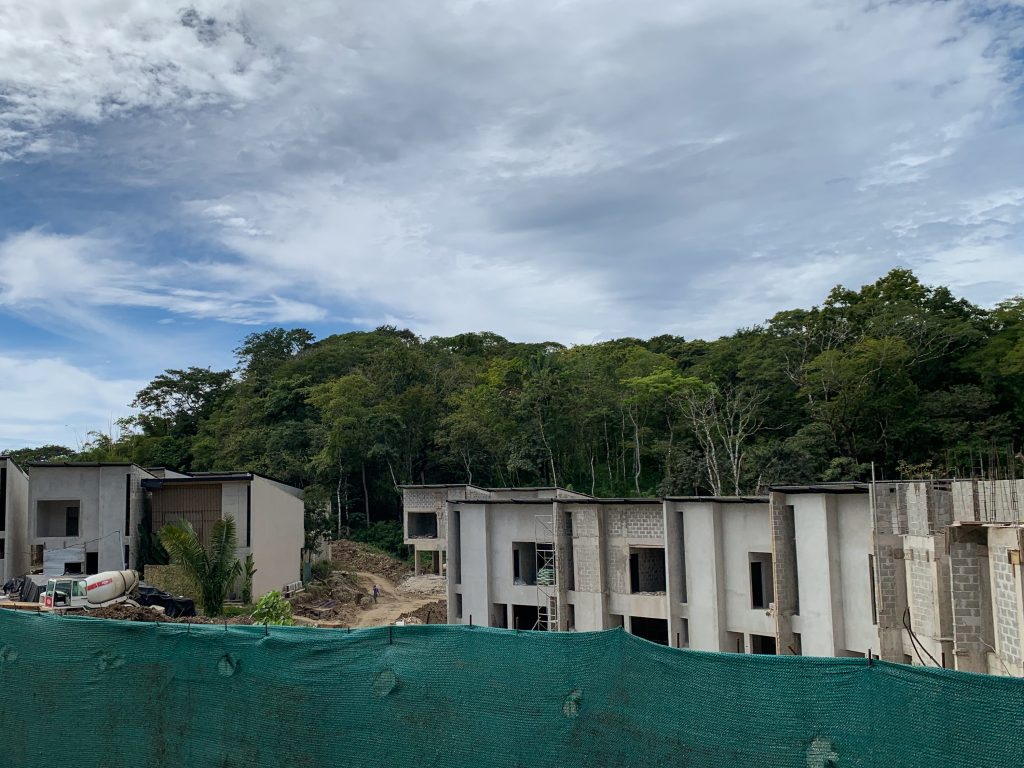
According to Barboza, what is happening is a change in land use: areas that previously had agriculture or livestock farming are now being settled by new populations with high purchasing power, which generates significant inequality. He calls this phenomenon “dissonant territoriality.”
“The local population stays living there, but under very persistent conditions of inequality in relation to the new spaces. There is a displacement that is more symbolic than physical. You don’t leave, but you stay as a second-class citizen,” Barboza explains.
Barboza also clarifies that this is related to real estate speculation and transnational investments by companies that have little or no relationship with the territory and are only seeking economic returns, regardless of whether it is in Costa Rica, Thailand, or Bali. These types of investments are often welcomed by both local and central governments because they supposedly generate taxes and wealth. He adds that these large projects are usually intended for short-term rentals or Airbnb, which ultimately remain empty half of the time.
And What Cultural Changes Are These Territorial Transformations Generating?
These dissonant territories are also touristified, Barboza points out. Traditional activities such as agriculture and livestock farming are gradually abandoned in favor of dependence on real estate investments and tourist flows. The expert asserts that 85% of tourists in Costa Rica are foreigners and that local tourism is not incentivized, neither through prices nor through offerings. Everything is designed for the visitor, leaving aside, at the social level, the development of vital areas for local populations such as public recreational spaces, education, and access to water.
For Esteban Barboza, the term “gentrification” has been used to encompass all these phenomena. According to him, it has been very useful at the level of activism, because everyone knows what is being talked about.
With the emergence of the phenomena described, citizen movements have arisen that seek to make these issues visible and open up conversation. Among these groups stands out the collective No a la Gentrificación, which has been one of the most critical voices, focusing on the effect of the arrival of foreigners with greater purchasing power, such as “digital nomads” and investors, on the lack of coordination between institutions and the need for political will.
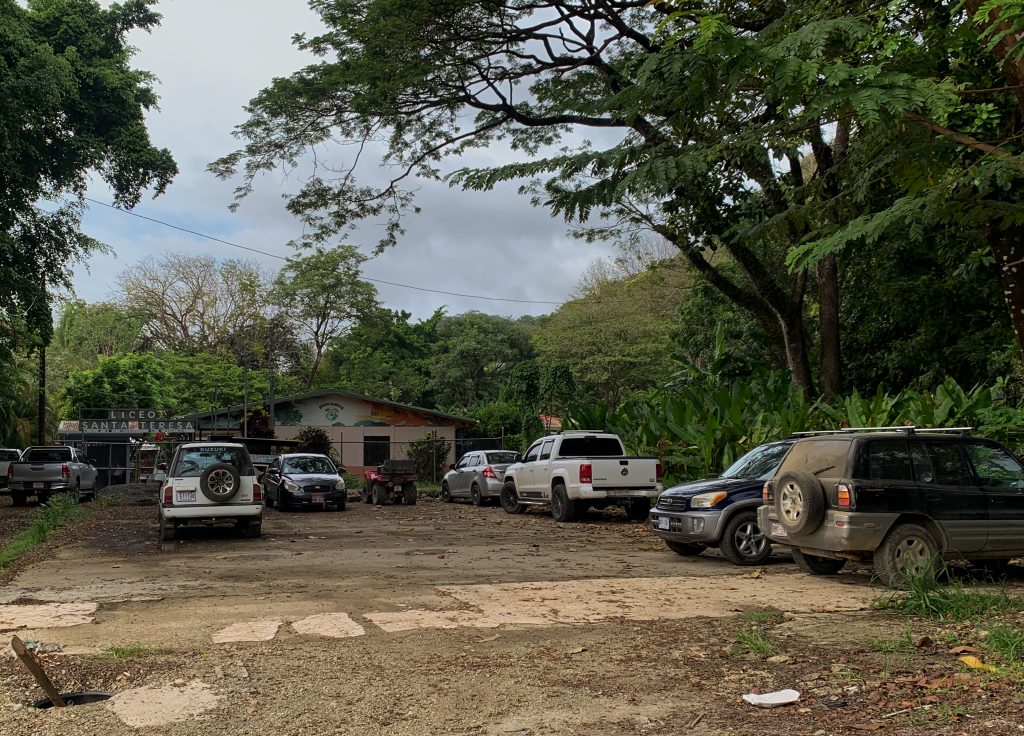
Foreign people: what is their role in all this?
The district of Cóbano is very accustomed to coexisting with foreigners, whether tourists or migrants.
Ivannia Rodríguez, 36 years old, a native of Cóbano, president of the Mal País–Santa Teresa Integral Development Association and hotel administrator, says that since she was a child she shared spaces with foreigners and perceived a relationship of respect and interest in the local culture.
“In the 1980s, foreigners arrived who discovered the area almost by chance, because they passed by boat or flew over it in small planes. They located the place and then came back. […] They came more as a way of distancing themselves from what they didn’t like about their countries, I don’t know, from capitalism. They built their houses with respect and tried to get involved and be part of the town,” Ivannia recounts.
She continues by explaining that later surf tourism began, and surfers were also seeking that connection with nature and camped on the beach. Later, with hotels and luxury developments, the type of tourist changed and people with higher purchasing power began to arrive, some even came to live, but sometimes without integrating as much into the local culture.
Regarding the presence of foreigners, Barboza and Rodríguez agree that there are mainly two groups:
“there are foreigners who come to live here and build their homes without the intention of making a fortune, and there is the investor who only sees money and whose only concern is business. They do not care about human development or the local population. They do not even care about the environment,” Rodríguez explains.
Esteban Barboza points out that “sometimes there is an attempt to demonize migrants who come to work, and that is really a misunderstanding of what is happening. While it is true that there has been an increase in migrants after the pandemic in this area, it does not correspond to the real estate explosion that has occurred.” He states that the system finds it “very easy to make people fight among themselves” instead of pointing to those truly responsible.
In this line, it is relevant to talk about “aporophobia,” a term coined by philosopher Adela Cortina in 1995, which refers to hatred toward poor immigrants, as opposed to xenophobia, which refers to rejection of foreigners in general.
Gustavo Oporta, 21 years old, is a native of Santiago de Cóbano and works as a receptionist. He relates that he experiences the presence of foreigners as completely normal as long as they respect the environment. He also makes this distinction between foreigners who come to work and live quietly and those who come “to do harm.”
“It’s not that millionaire investors come to live here. […] Maybe they come and stay for some time, but they will never regularize their status, they will never be migrants, they will never obtain residency ID because they are not interested,” Barboza explains.
Ivannia also expresses concern that some of these developers do not take care of the environment: “some say that when this place is no longer attractive, they will go to the next place. That is very easy for those who have economic leeway, but what about us? I can’t go to another place, and I don’t want to either. We stay here with the problem. And that’s where resentment begins, blame starts, and sometimes things explode over the smallest issues. Sometimes the innocent pay for the guilty.”
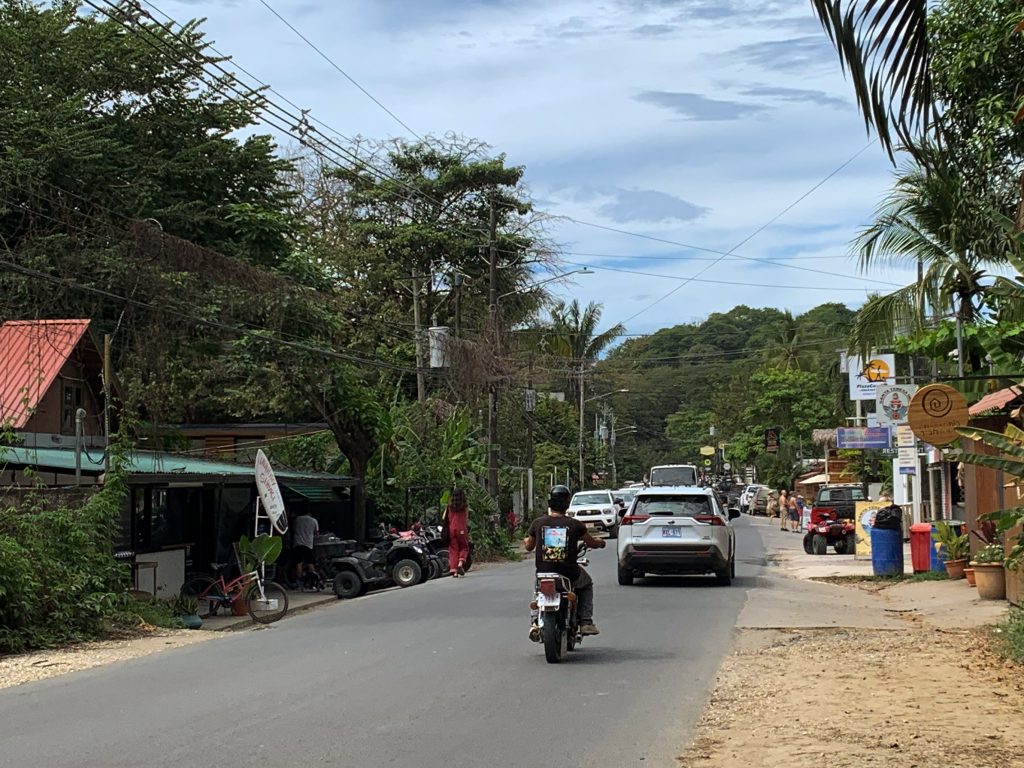
The labor market
Since there are no employment data specific to the district of Cóbano, it is impossible to quantify the real impact of foreign people occupying jobs and under what conditions they do so.
We asked Rodríguez, the president of the ADI, for her opinion about foreigners who come to work in sectors such as tourism.
“If foreigners have jobs, it’s because there are jobs, and also because sometimes they have better English than many locals. That can be unfair because we don’t have the same facilities to study. Now things are changing a bit because there has been more presence from the Migration Police and the Ministry of Labor.”
She also believes that a local person who works well will always have a job. On the other hand, she considers that there is a demoralization among young people, who sometimes feel they won’t have access to a good position and choose easier paths, “even entering the drug market.”
We spoke with Mario Mikowski, owner of a hotel in Santa Teresa and auditor of the Blue Zone Tourism and Commerce Chamber (Catuzca), about irregular hiring and opportunities for local people. Mikowski states that his hotel has a workforce made up of more than 95% Costa Ricans and that although it is not easy, it is a matter of each business owner’s work philosophy. He is also firm that there are no excuses for not doing things legally and emphasizes that anyone can approach Catuzca to ask for information about procedures and requirements.
“If someone wants to hire a person who is not Costa Rican, registers them with the institutions and obtains a work permit, welcome, we are not here to discriminate against anyone. But those who truly have the mission to hire Costa Ricans, it’s not easy, but it’s not impossible either,” Mikowski states.
Regarding hiring practices, academic Esteban Barboza explains that there are sufficient migration laws that must be complied with and that if migrants are working irregularly, it is the problem of a system that is very permissive with businesses that exploit them.
Rodríguez also questions the quality of the jobs brought by large developments: “those mega-projects of 100, 200, 300 lots, what kind of jobs do they bring? A lot of gardeners, maintenance, cleaning, but they don’t encourage locals to grow.”
She believes that specialists are often brought in from outside and explains that it would be a dream for her to see a university institution in the area so that “in the future, those children can be the administrators, lawyers, or doctors in their own town.”
District Mayor Ronny Montero assures that from the local government all efforts are being made to improve education, and although it is the responsibility of the Ministry of Public Education (MEP), it is the duty of local governments to request and manage support from institutions. Part of what they are promoting is a course from the National Training Institute (INA) on General Tourism Guiding, lasting a year and a half. The course should start in February 2026 but due to a low demand, it might not happen.
Montero also believes that there has been a great lack of financial education, and that many people sold land believing the money would last a lifetime. By increasing their spending level without planning, they end up facing economic hardship.
“Many ended up taking care of the garden of the property they sold,” he concludes.
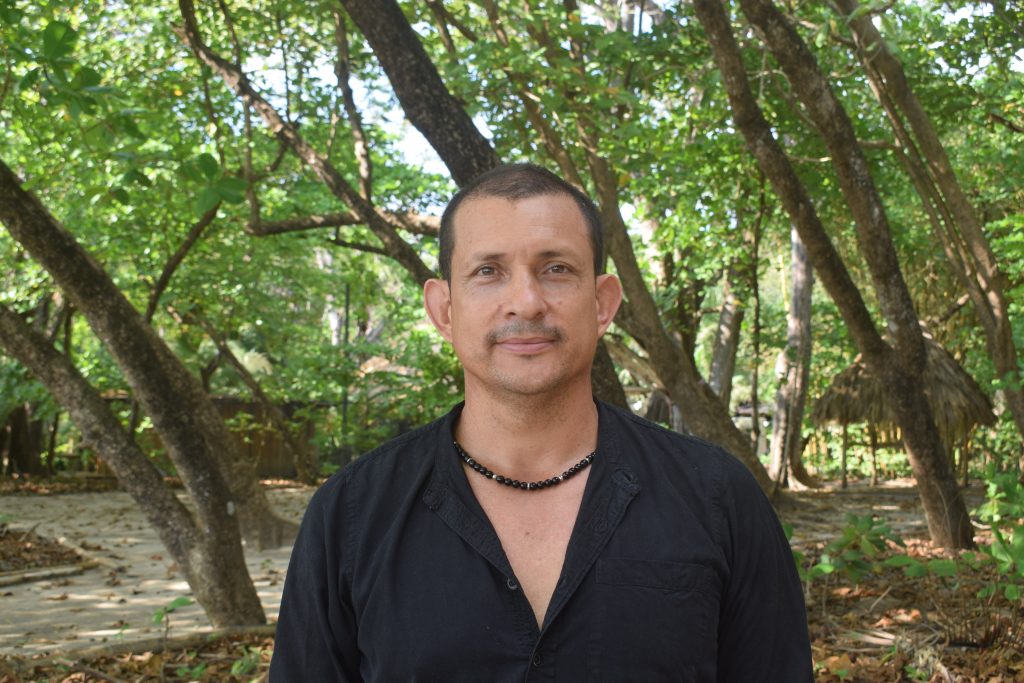
Richard Mora, 47 years old and a native of Santa Teresa, recounts that he previously worked in agriculture and livestock farming, and that the jobs were very physical. Since around the year 2000, he has worked in tourism as the owner of a transportation company and says that his quality of life has improved, although everything moves faster and “the work is more mental.”
When asked about educational opportunities for the local population, he says that sometimes there is a lack of interest from the individual themselves and explains how he learned English in a course offered in Cóbano from 2008 to 2010, and later went to live in London for two months to continue learning. He stayed with a family he had met in Santa Teresa.
Regarding work, he believes that foreigners who come to work should regularize their status for their own well-being, so that business owners do not take advantage of their migratory situation.
Richard Mora says that his life evolved alongside tourism and that daily life has always unfolded in harmony with foreigners, although sometimes there are complaints because “a foreigner appears who wants to do whatever they want,” and also “because there are locals who fight over waves.” He feels very privileged to have grown up in the area and prefers not to split hairs too finely on certain issues.
The Absence of Institutions
At the beginning of this year, 2025, there was a major operation in Santa Teresa in which Migration Police and the Ministry of Labor visited several establishments during operating hours, resulting in some being temporarily closed.
The District Mayor explains that they received so many complaints related to establishments employing staff irregularly that it was the district municipal council that requested these institutions to carry out an organized 17-day operation. Ronny Montero explains that doing everything in one or two nights was not the intention. He considers that the operation did not cover a wide enough area and was also too impactful for residents and visitors.
The Mayor believes that there should be a regular presence of Migration and Labor authorities in Cóbano, at least weekly or biweekly, to “carry out inspections, stop vehicles, and verify documents, because it’s not only about labor issues—we also don’t know what kind of people are traveling on our roads, we don’t know if this is becoming a place where people fleeing legal processes in other countries are hiding.”
He also believes that with more institutional presence, more establishments would operate regularly and competition between locals and foreigners would be healthier. From his perspective, even regularization processes would improve, since currently people have to go to San José or Puntarenas to complete procedures.
David Chaves, from the collective No a la Gentrificación, explains that these operations were the result of media pressure across the country and adds that due to the absence of institutions in peripheral areas of the country, “there is a sense of impunity—the law feels distant, and it doesn’t feel necessary to comply with it because there is no enforcement.”
Alejandra Fallas, 26 years old and a native of Bethel de Cóbano, is a teacher and works at a private school. She expresses that she feels many foreign-owned businesses are not subjected to the same oversight as Costa Rican ones and also believes that there has historically been corruption in administrations. In general terms, she has always maintained a cordial relationship with foreigners and has always enjoyed learning about other cultures and ways of seeing the world.
Are there solutions?
“There are places in the world where they have put the bell on the cat. And in this case, the cat is Airbnb,” explains Esteban Barboza.
In cities like Barcelona or New York, city councils have heavily restricted the presence of these vacation rental platforms, but in Costa Rica Barboza believes the State has been complacent with them.
“When I talk about the State, I mean all layers of the State—from the central government, which prioritizes attracting foreign investment, to local governments that grant permits under questionable conditions,” Barboza points out.
Barboza also emphasizes the importance of community organizations: “All the projects that have been stopped have been stopped because of people’s activism, not because the State stopped them or because the State didn’t allow them. It’s when people realize what has been done.”
For his part, District Mayor Ronny Montero believes solutions lie in encouraging local people to start businesses, with financial support, credit, and training, so they can become owners of tourism businesses and not just workers in them.
Mikowski assures that it is necessary to emphasize youth education: “[Investment in education] is a very long-term project. You would have to make the change and wait for this entire generation to go through the educational process before entering the labor force—we’re talking about 5 or 10 years. But if you don’t start, you don’t finish.”
The State of the Nation Report proposes actions aimed at enforcing existing regulations, encouraging community participation, combating corruption and discretionality, and refocusing the environment and social justice at the center of the public agenda.
From No a la Gentrificación, they also emphasize the importance of citizen participation in meetings and political agendas, and that communities organize and raise their voices against injustices that affect them beyond social media posts. Chaves believes that there is increasing awareness and more information, and that the trend is toward improvement, but that real estate project development continues and the struggle must not cease.