Getting professionals back to work: an institutional, cultural and mental challenge
Between the ages of 50 and 65, the job market closes doors to them due to prejudices about their technological skills or health, ignoring their resilience and commitment. Alexandra Ivanova reports the story in this article created with a grant from “Journalism in Times of Polarization,” a project of the Latin American Solutions Journalism Fund. The Fund is an initiative of El Colectivo 506 in alliance with the SOMOS Foundation. “Journalism in Times of Polarization” is made possible by the support of the Canada Fund for Local Initiatives. The Canada Fund for Local Initiatives—administered by the Embassy of Canada—funds small-scale, high-impact projects aimed at empowering vulnerable communities and populations and promoting human rights for all people.
The article was published by Revista Pasacalles on Dec. 26, 2025. It was adapted and translated here by El Colectivo 506 for co-publication. We used Google Translate to support the translation.

“Study! Prepare yourself!” This is the message broadcast to Costa Ricans who strive to improve their lives and provide for their families. However, for many of them, the dream of practicing their profession seems unattainable, despite their professional degrees and even years of work experience. This is especially true for those between 50 and 65 years old who completed their studies after the age of 40, as well as those who, for one reason or another, have lost their jobs.
According to the Labor Market Analysis conducted by the Institute for Economic Research (IICE) at the University of Costa Rica, the unemployment rate fell from 8.5% in the second quarter of 2024 to 7.4% in the second quarter of 2025. However, people over 50 years of age continue to face significant obstacles in accessing the labor market.
A study by the Economic and Social Observatory of the National University (OES-UNA) indicates that this population group represents 75% of all those excluded from the labor market. Despite legislation that establishes all population groups’ right to work, ageism; other concepts ingrained in Costa Rican culture; and employer prejudices represent a barrier that not everyone manages to overcome.
Frustrated dreams, prejudice, and the need for enterprise
After years of working as a manicurist, Melissa Granados made a decision she thought would help her advance professionally. However, after investing time and money in her studies and earning her university degree in business administration, the woman from San Isidro de El General says she hasn’t been able to find a job. According to Granados, women aged 40 and older face rejection when looking for office work.

“My degrees are just gathering dust,” Melissa says. Starting and managing her own business, such as a beauty salon with several employees, could be a solution, but it requires a significant investment.
For Lidieth Rivera Olivares and her husband, Rafael Méndez Bermúdez, the dream of completing their high school studies came true only after they turned 50.
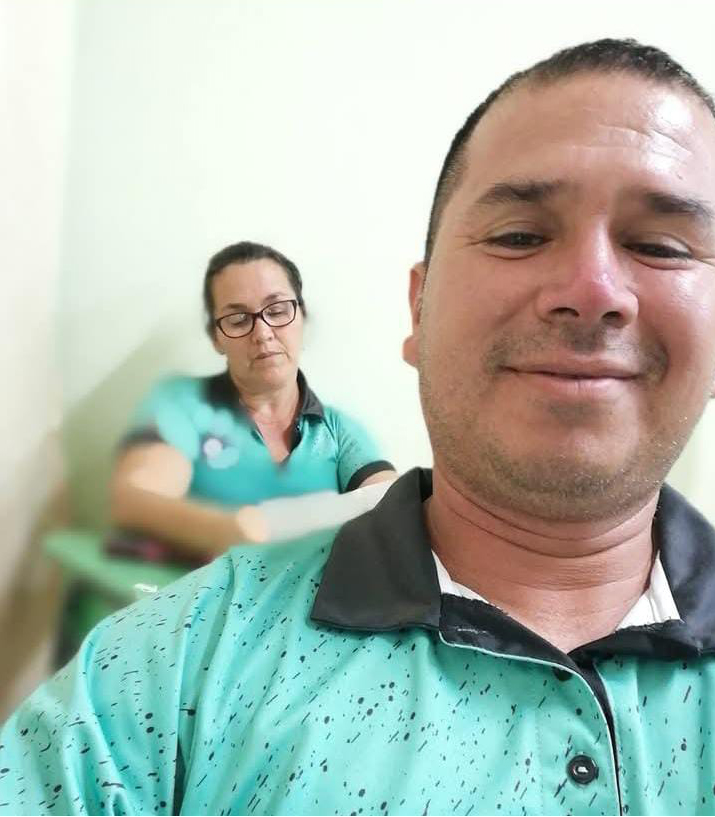
“When we were young, we had to work a lot. We would go to school, but then the season for picking coffee or harvesting beans would begin. That’s why I was never able to get a sixth-grade education,” says doña Lidieth, adding that it was during those times that she met her future husband.
“I met Rafa when I was 11 years old, so we’ve known each other since we were kids. For a while we were boyfriend and girlfriend. Then we decided to move in together and went to live in Limón,” she says. “He worked on the banana plantations and I stayed home. We had our eldest daughter, and a while later, talking with a friend, I found out about the opening of the Integrated Adult Education Center (CINDEA) in Lomas de Cocorí.”
Doña Lidieth’s next step was to share her dream of studying with her husband, at least to complete elementary school.
“At this age, doors close on people and it is very difficult to get a job. However, we decided to at least finish our studies,” she says.

Lidieth and Rafael began their studies. It was a very difficult time for the couple due to a family member’s illness. Their goal was to find stable employment, but their age prevented them from doing so. Therefore, they continued working on their small business, selling orange juice, which has helped them get by and provide for their children’s education.
“With the [juice] cart we got ahead and gave our children an education,” smiles Doña Lidieth.
The job search has also been challenging for educator Florie Oconitrillo, even though she holds several academic degrees and extensive teaching experience both in Costa Rica and abroad.
“In our society, there are certain prejudices related to people over 50, known as ‘ageism in the workplace.’ One of these prejudices is that these people don’t handle technology well, which isn’t true,” she points out. “As an educator, I’ve seen cases of young people who didn’t know how to use a computer because they didn’t have one at home or at the school where they studied, and they didn’t have time to learn how to use it.”
The educator says that, on the contrary, many people her age learn to use technology through their own efforts and are not afraid of learning.
Another prejudice, according to Florie, is that older people adapt more slowly to new environments, which is also wrong.
“Throughout life we have faced different situations, and that’s what makes us more resilient. We are not afraid of change because we are used to change and the need to adapt,” she adds.
The teacher also disputes another common belief: that older people get sick more often.
“Based on my experience with students, for many young people, a cold is an impediment to working,” she notes.
She adds that, according to her observations, some employers seek young people for other reasons, such as lower salaries, flexible schedules, and the perceived growth within the company—although after receiving training, these young people often look for other jobs. Older people, on the other hand, seek stability.
Depression caused by prolonged unemployment
One of the most serious consequences of prolonged unemployment is depression and a lack of motivation to continue striving for one’s dreams, says Florie Oconitrillo.
“Feeling excluded from the job market is terrible; it affects you emotionally and is very demotivating,” she says. “It’s completely demotivating to go to a job fair and see that younger people receive more and better attention.”
The teacher says that she loves her profession, which has given her the strength to persevere. Throughout her career, Oconitrillo has worked as an English teacher, a Spanish as a Foreign Language teacher, and an elementary school teacher specializing in English.
In recent years Florie worked at the INTEVA Training Center in Pérez Zeledón, where programs have been developed in conjunction with the National Learning Institute (INA) and the Ministry of Labor and Social Security (MTSS), to support low-income youth in order to make them more competitive in the labor market. English has become an effective tool for this.
“The most rewarding thing is seeing my students employed in different commercial establishments,” Oconitrillo says.
The teacher points out that a large number of professionals with bachelor’s degrees graduating in a short period of time also creates a higher level of competition for all segments of the population, both young and old.
According to Florie, who now works as an English teacher at INA, training could address some shortcomings someone might have, especially in the technological area, as well as providing emotional and psychological support.
“Support groups could be very helpful, especially for people in the same profession, who could share a lot,” she says.
Lack of awareness about legal compliance
To understand the emotional and cultural background of the problem in depth, Pasacalles Magazine spoke with Dixiana Vargas, a clinical psychologist, who says that age discrimination is a situation that occurs in both developed and developing countries. Costa Rica and the Southern Zone have been no exception.
“Costa Rica is aging. Therefore, one of the main causes of the situation is that many people are getting older. On the other hand, many of them leave the labor market due to family obligations, so we have to recognize that there are various causes,” says Dixiana.
The first impact, according to the expert, is emotional: “A person who loses their job begins to question everything and enters a tremendous state of uncertainty, even leading to depression, not knowing what to do with their life. This negative emotion must be addressed.”
According to the specialist, the issue of awareness plays a critical role in the search for a solution to this problem.
“At this age, a person is at their peak, but it seems we’re not aware of it,” she says. “We’re wasting opportunities to have truly skilled and experienced people. It’s a real shame that we don’t understand the true potential and knowledge of these individuals. We’re also talking about resilience and wisdom, since throughout their lives, these people have known how to overcome adversity.”
Another point to highlight, according to Dixiana, is that Costa Rica has more than 10,000 laws, only one of which clearly addresses this issue.
“We have the National Policy on Aging, which clearly establishes the protection of the rights of older people with respect to work. We have norms, laws, and international conventions that establish worker protection, but the level of awareness is not sufficient,” the expert reiterated.
Social security contributions also prevent many companies from hiring this category of workers, she says.
“The laws themselves are not designed to protect these people, even though they say otherwise. Therefore, the employer disregards their experience, knowledge, and track record,” she explains.
Costa Rican idiosyncrasy also influences the situation, she says: there is a social construct where a person has to be grateful for a job opportunity, even if they have the capacity to contribute a lot to the company.
The psychologist emphasized that people who achieve academic degrees at any age deserve respect and admiration, since training is always an important tool for reaching the next level.
“What we lack is the awareness to understand that these people will be more than grateful and will give their best in their work,” she stresses.
Intergenerational coexistence to combat stereotypes
Cultural limitations and age discrimination, along with stereotypes and prejudices, stand out as key factors shaping traditional employment policies, according to Noelia Alfaro, coordinator of the Aging Program at IDESPO-UNA and UNA PAM, Brunca Regional Campus of the National University (UNA).
“Older adults are often excluded because their abilities and experience are frequently underestimated,” she says. “A 2023 study on perceptions of older adults shows that negative perceptions still prevail. A large percentage of respondents have internalized these stereotypes, associating older people with loneliness and social isolation.”
Noelia points out that the same study reveals the presence of infantilizing and pathologizing stereotypes in the majority of the population interviewed. Older adults are associated with depression, vulnerability and illness, when these characteristics cannot be generalized because the aging process is individual for everyone.
The specialist emphasizes the importance of highlighting the contributions these individuals make in the workplace, community participation, and the promotion of culture and national identity.
To minimize stereotypical views and build a culture of intergenerational coexistence, the National University is implementing the UNA PAM project in Pérez Zeledón, based on a group of people who expressed the need for a learning space within the University.
“This request, coupled with the sociographic changes that Costa Rica is experiencing—including rapid population aging, in which Pérez Zeledón is no exception—motivated the creation of this project,” Noelia explains. “Its purpose is to facilitate open courses and workshops to give these individuals the opportunity for social participation.”
In the canton of El General, according to the project coordinator, nine courses have been offered on diverse topics such as languages, agriculture, tourism, and mental health.
“The topics are not selected by the university, but by the people themselves who show an interest in learning. The project has a gerontological focus, so the teachers receive specialized training to work with this population group. Intergenerational relationships between these individuals and UNA students are also fostered to create a more inclusive and supportive society,” she concludes.
Thanks to UNA PAM, more than 100 people have acquired knowledge in English, computing, administration and handling of technological tools, among other free courses.
|
|---|
Source: Nacional University (UNA)
Brete Platform, Active Job Search, and other tools used by the Municipality of Pérez Zeledón
One of the tools the Pérez Zeledón local government uses to reduce unemployment across all population groups is the Job Bank, which has been operating in the municipality since 2018.
According to Karen Arias Hidalgo, spokesperson for the Pérez Zeledón Municipality’s Office of Guidance, Mediation, and Job Placement, the municipality had been working with the Ministry of Labor and Social Security (MTSS) to improve employability in the canton. The office was established through an agreement with the MTSS and the National Employment Agency, which has enabled the management of employability-related projects.
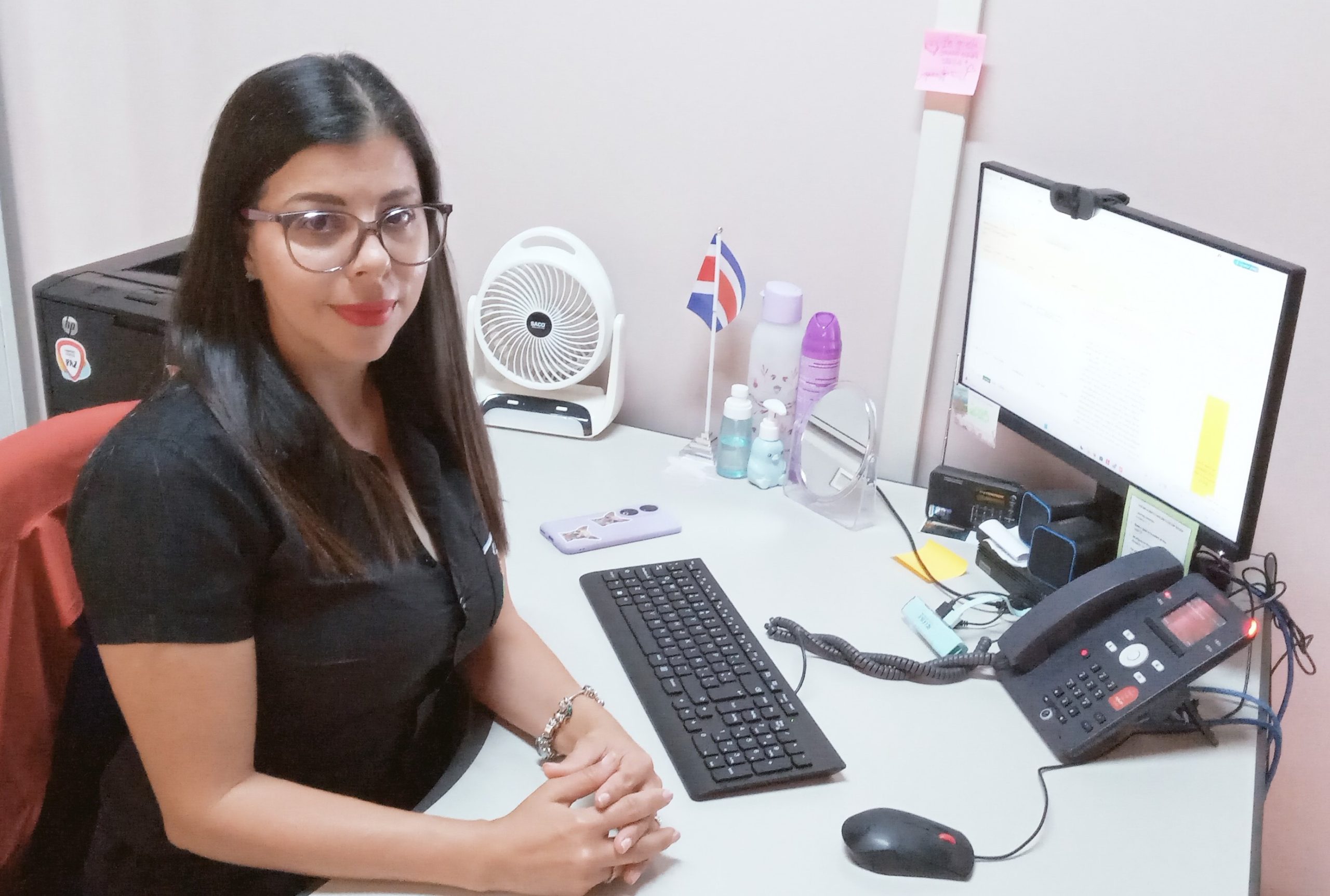
“The flagship project managed by this office is the Brete Platform, the national strategy where people register as users and create a resume to participate in job opportunities,” Karen explains. “We also have the Empléate technical training program, the Active Job Search (BAE) program, and access to the INA’s program offerings. The platform also provides access to programs for women, people with disabilities, and entrepreneurs.”
In addition, the office works on socioeconomic development projects in collaboration with other state entities.
“One of my roles is to determine the needs of the population and conduct surveys for businesses and entrepreneurs. For its part, the INA’s Chirripó Advisory Committee facilitates training in different areas,” the official added.
According to Karen, people between the ages of 50-65 who for one reason or another are no longer part of the workforce possess something very valuable: experience. However, placing them in the job market is very difficult.
The official says that the employability of these individuals depends directly on companies.
“As a municipality, we don’t have much direct involvement in this. However, we can recommend people to companies and we try to raise awareness. It’s also important to assess people’s skills, and if someone decides to start their own business, we provide them with training,” Karen explains. To raise awareness, talks, workshops, and job fairs are held.
As an employment manager, the official believes that people in this age range should be viewed positively, given their work experience, acquired knowledge, and life experience.
“The employers who hire these people tell us that they are very responsible, punctual, and grateful workers. It’s not that young people aren’t like that, but older people have a wealth of life experience, and I would use that if I were the owner of a company,” she adds.
According to Karen, respect and recognition of experience and job opportunities must be mutual, because employers invest significant resources in maintaining their businesses.
Soft skills, in the official’s opinion, are a crucial factor that cannot be overlooked.
Companies now highly value people’s soft skills, and that’s where we focus in all our workshops. Therefore, at the Labor Mediation Office, people are taught about teamwork, the importance of managing emotions, resilience, and empathy.
“Behind every worker is a human being who, despite trying their best, has personal challenges and deserves to be treated with dignity. Workers should be grateful for a job opportunity, but at the same time, they must know they have the right to fair treatment from the company. There needs to be a balance between the worker and the employer,” Karen says.
Mentality shift as the primary solution
The San Isidro Labrador International University (UISIL), among other institutions, has frequently hired professionals over the age of 50.
“Academic qualifications are the key factor in hiring. UISIL strives to employ professionals in this age group. In the maintenance department, we have colleagues over 50 years old; in fact, two years ago, one of our employees retired,” says Yilliam Valverde Camacho, academic coordinator for Spanish-language instruction at the university.
In the case of education professionals, the institution takes into account the experience of this group of individuals.
According to Yilliam, the digital divide is a problem that prevents some people from entering the workforce.
“After the pandemic, we lost some very valuable professors, precisely because of the technological issue. However, others chose to innovate and relied on the training that the University itself had provided, so we have several professors over 50 years of age. Some of them are retired and continue to provide their services to UISIL,” the academic coordinator states.
She agrees with other interviewees that in Costa Rica, this population group faces labor exclusion, especially those with incomplete studies.
“For these individuals, it’s very frustrating and makes them feel vulnerable and disadvantaged compared to other population groups, not only in this canton but nationwide,” she says.
Providing these professionals with the development opportunities they may not have had for a long time is the main factor influencing hiring decisions, the educator adds.
“In Pérez Zeledón, we need much more labor, more companies to come here and offer more opportunities to this population group. There also needs to be more openness with other entities that train people in technical fields so they can obtain decent employment, but we need a shift in mindset toward inclusion,” she concludes.
Having faith in their abilities helps overcome the fear of stereotypes.
The cleanliness and order that users of the UISIL facilities find is the product of the work of Henry Barrientos Vindas and his colleagues. With deep gratitude, don Henry speaks of the university administrators who trusted in his abilities when he needed a job.
For 14 years, Henry Barrientos has worked as a custodian at the institution. He was 48 years old when he started there.
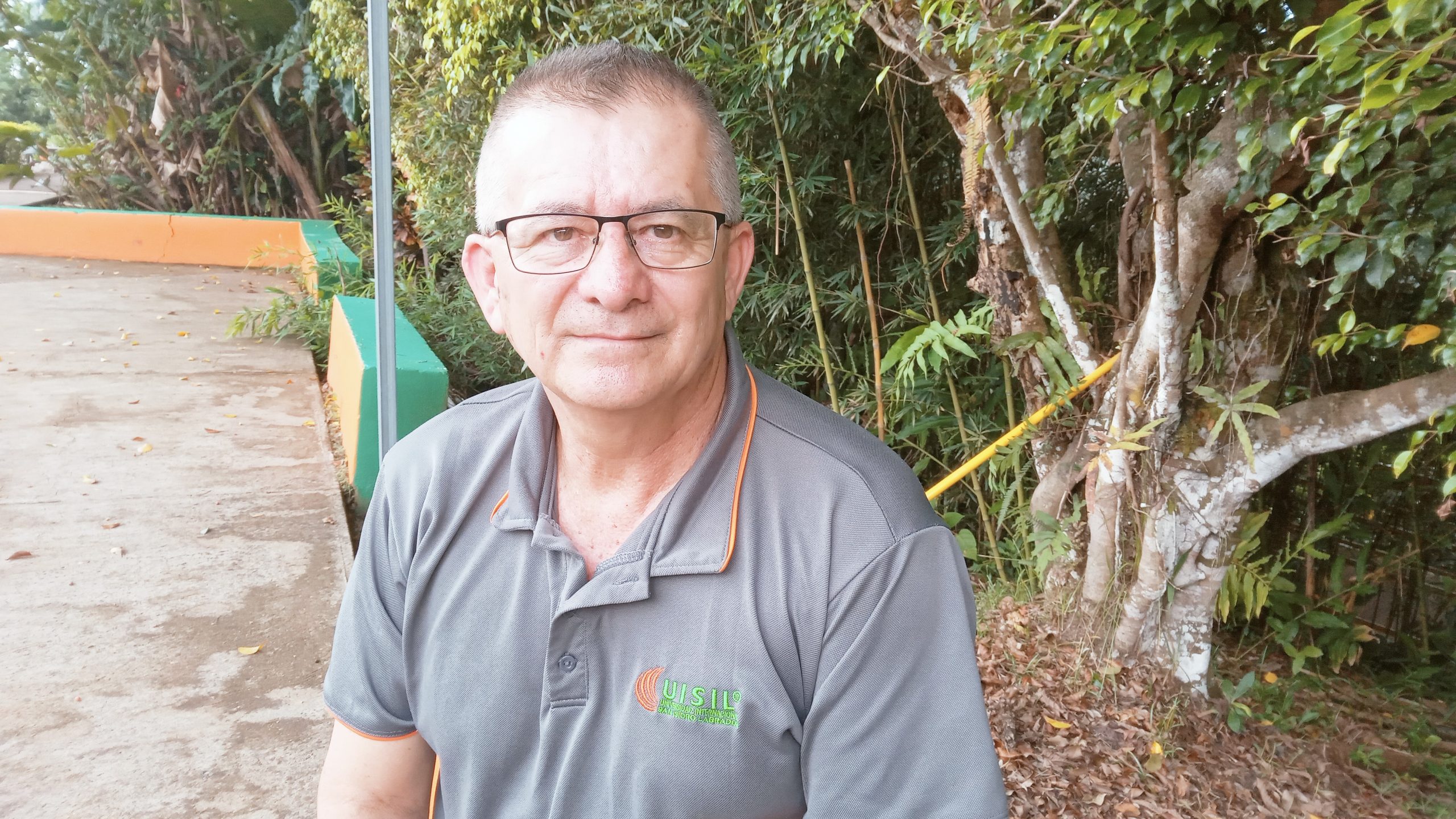
“I had just arrived from the United States and didn’t have a steady job. Thanks to the support of the university owners, I started working here because they knew me personally and trusted me. These are the opportunities one is grateful for, because there are still people who believe in you,” he says.
Don Henry says he also has the support of his younger colleagues, while his bosses have always been attentive to his ideas for improving the work.
“They see the employee as an ally, and it’s a great way to develop at work and give your best. I’ve always told my colleagues that you shouldn’t ‘throw in the towel’ at work, because if you see the problem as too big, the problem will defeat you,” he says.
For Don Henry, the most important thing for joining the workforce has been overcoming the fear of stereotypes and having faith in the possibility of breaking down barriers.
Author