Where memory flows: the rebirth of the springs in Ascensión de Guarayos
In Bolivia, the evolution of the project to restore the pauros, or springs, has become a comprehensive strategy that encompasses both water protection and the preservation of green spaces. Learn how they achieved this by reading the report by journalist Brenda Villalba Sánchez, produced with the support of the Latin American Solutions Journalism Fund, an initiative of El Colectivo 506 in collaboration with the SOMOS Foundation. It was originally published in Casa de Nadie on March 13, 2026, and has been adapted here by El Colectivo 506 for co-publication.

The bus ride between the city and his village seemed to intensify the sound of water in his memories. Rolando would close his eyes and see himself again as a child, playing with his neighbors near the spring; the spring was the first thing he looked for when he got off the bus. However, when he arrived at his destination in 2022, nostalgia collided with reality. The paúro of his childhood, that sacred spring in the neighborhood, was completely dry.
It wasn’t just the weather. Rolando sensed that something deeper was killing his origins
That year, Ascensión de Guarayos (the most populous capital in the province) was experiencing the worst water crisis in its history. Between November and December, the only reservoir that supplied the water treatment plant ran completely dry. This phenomenon is not isolated; the municipality has been experiencing drastic temperature changes for years. A study by the Center for Research and Promotion of Rural Life (CIPCA), (CIPCA), predicts a temperature increase of more than 3.4°C, as well as a 34% reduction in rainfall, by 2050—a crisis exacerbated by the constant forest fires. Also in 2022, approximately 400,000 hotspots were recorded in the area, according to data from municipal engineer Jackmina Mustafá.
The consequences of these environmental disasters remain etched in the memories of the residents. For Micaela Iriapi, a teacher and local resident, desperation was palpable in every neighborhood as people carried buckets from one place to another, trying to get water.
“It was a time of anguish,” she says. “I remember well that we waited for the water truck at the corner of our house; we were desperate for water, and, look, sometimes it didn’t arrive. We didn’t know where to get it. Imagine: we waited until four in the morning.”
Micaela and hundreds of neighbors turned to old, abandoned water sources: wells and springs. But these springs, forgotten after the arrival of the potable water network, were dying. Changes in land use, the lack of state protection, and the absence of a sewage system had turned them into sources of pollution. While other residents transported water from a river 12 kilometers from the town center, even this effort was insufficient to meet the demand of 50,000 inhabitants. The supply evaporated in hours.
Faced with the magnitude of the disaster, the Municipal Council issued an Autonomous Law declaring a municipal state of emergency due to drought. The response was overwhelming and preventative funds were soon depleted, directly impacting the livelihoods of 29 neighborhoods and 7 housing developments.
Paradoxically, Ascensión de Guarayos is an Amazonian region rich in wetlands, streams, and lagoons. However, uncontrolled urban sprawl and government neglect have suffocated these natural resources. When Rolando found his paúro, or spring, dried up, he understood that it wasn’t just climate change: it was a systematic neglect that had obstructed one of the most sacred sources of life in his culture.
Young hands, recovering memories
Before falling into oblivion, the paúros were not just water sources; they were meeting places and gathering spots in Guaraya culture. Their social, historical, and cultural significance built a collective memory long before the arrival of the potable water network, earning them recognition as “ancestral sources of life.”
When Rolando returned to his mother’s house in 2022, he embarked on a historical journey through the voices of his mother and grandmother. Both are knowledgeable about the local culture and told him how the paúros were cared for in the past and what their function was. This sparked an idea within Rolando. With the support of his mother, a teacher, he decided to seek help through his school.
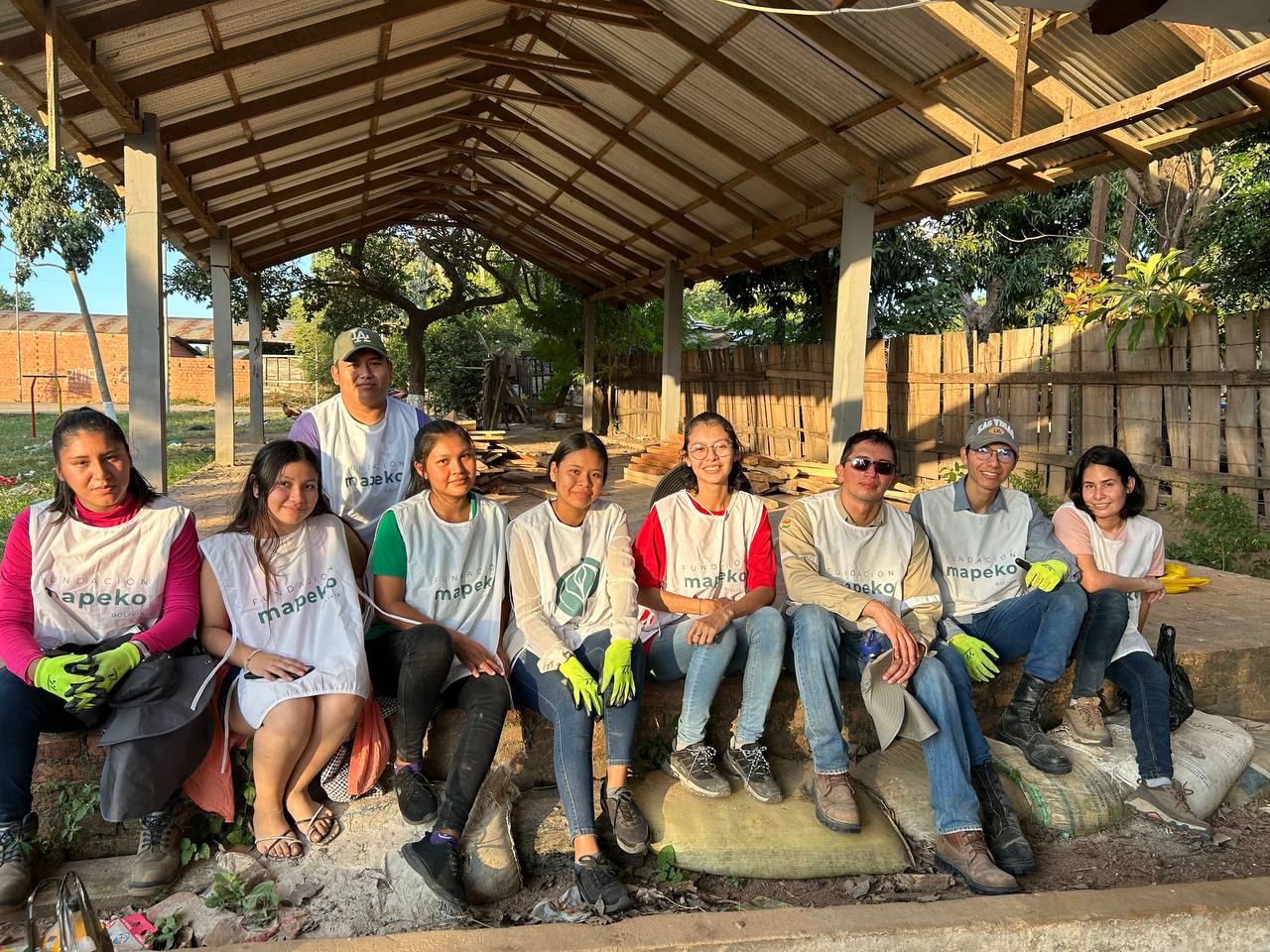
At the Madre María Weber Educational Unit, students participated in cleaning one of the paúros nearby. Following this experience, 10 other schools cleaned and restore eight more paúros. Rolando says that the inter-institutional support between the School District, the COSPAS cooperative, and the environmental departments was fundamental in transforming the school project into a comprehensive environmental initiative.
“This project originated with young people who see this issue as having an environmental connection to culture, because the paúros are an integral part of the Guarayo people’s culture,” explains Robert Schock, president of the Ascensión de Guarayos Council. “Before the installation of the water tanks, the paúros were the water sources; they were meeting places, mainly for women who went there to wash clothes and exchange experiences.”
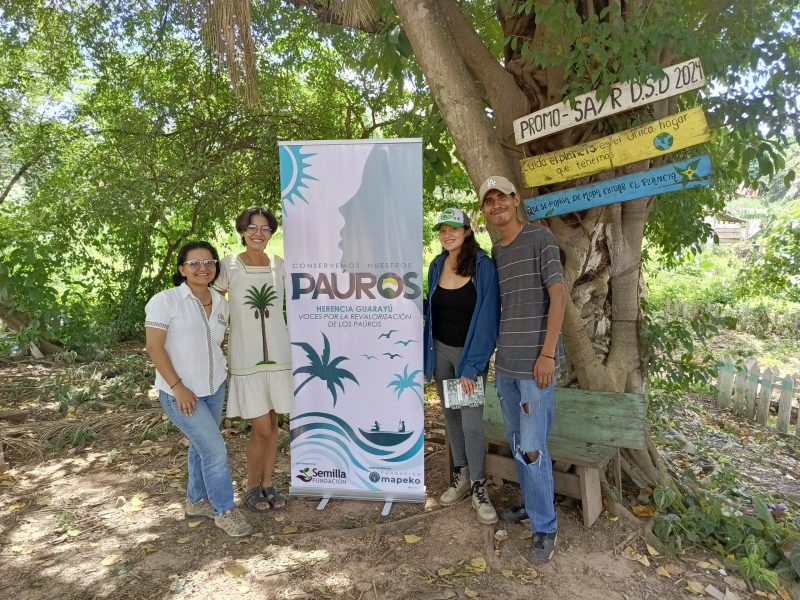
A year before securing their initial funding, the student committees led by Rolando brought together various institutions to present their proposal. The project, named “Let’s Conserve Our Paúros,” was spearheaded by young people and the MAPEKO Foundation. They then became an operational arm of the Ascensión Environmental Department.
In 2024, with the support of the Green Habitat Foundation, they participated in the Nature-Based Solutions call, launched by the Semilla Socio-Environmental Foundation in partnership with Voices for Just Climate Action (VAC) and WWF Bolivia, where they obtained funding to develop the recovery and conservation project.
Rolando mentions that, although the project began with an environmental objective, they learned its cultural and historical importance along the way. Thus, the project now comprises three phases: the recovery of the paúros, focused on young people; the consolidation of an ecological corridor; and, above all, the recovery of ancestral memory and practices in 24 of the municipality’s 31 neighborhoods.
The project’s impact was so profound that, in March 2025, the Ascensión de Guarayos Municipal Council enacted Law 02/2025: “Law for the Protection, Conservation, and Restoration of Paúros.” This legislation not only formalizes the care of these springs but also establishes clear sanctions for those who threaten these sources of life, legally safeguarding the effort that arose from the collective memory of the young people and their community.
“They have given life and heart to the young people. I really liked that the parents also participated,” says Micaela Iriapi.
Rolando’s current challenge is encouraging other young leaders to take charge of the project. In Ascensión, however, this leadership is already being formed, even going so far as to create the first Municipal Youth Council.
A unique, collective spring—and an ancestral practice
The geological formation of paúros arises from soil erosion caused by the constant pressure of water during floods. The collision of river water creates voids in the earth that eventually connect with groundwater, causing it to constantly rise to the surface. Scientifically, the formation of a paúro is a long process spanning hundreds of years.
In this way, paúros fulfill a vital interconnectedness within ecosystems. Environmental engineer José Mora Rocabado explains that the springs are not only affected by climate change due to their connection with all tributaries, but also possess key ecological importance because of their value to biodiversity.
“In every body of water fed by groundwater, there is a unique biodiversity,” he says. “it is endemic to these waters.”
Municipal reports attribute a unique characteristic to the paúros, uniting their ecological and cultural significance. To date, 14 have been recovered and conserved, with a total of 21 identified by their original Guarayu names. The paúros acquire the names and identities of the nearby residents, reaffirming that they are, above all, community resources.
The geological formation of paúros arises from soil erosion caused by the constant pressure of water during floods. The collision of river water creates voids in the earth that eventually connect with groundwater, causing it to constantly rise to the surface. Scientifically, the formation of a paúro is a long process spanning hundreds of years.
In this way, paúros fulfill a vital interconnectedness within ecosystems. Environmental engineer José Mora Rocabado explains that the springs are not only affected by climate change due to their connection with all tributaries, but also possess key ecological importance because of their value to biodiversity.
“In every body of water fed by groundwater, there is a unique biodiversity,” he says. “it is endemic to these waters.”
Municipal reports attribute a unique characteristic to the paúros, uniting their ecological and cultural significance. To date, 14 have been recovered and conserved, with a total of 21 identified by their original Guarayu names. The paúros acquire the names and identities of the nearby residents, reaffirming that they are, above all, community resources.
Despite the fact that we’re talking through screens, it’s easy for me to sense Micaela’s joy when she tells me about the afternoons she spends at her school. She says that the project is helping to recover that sense of identity.
“There’s a paúro near the school where I work,” she says. “Every time I leave, I see the women washing clothes under its shelter; they’re always chatting. That paúro is nearby and you can see it from the school.”
However, modernity brings its own risks. To protect water quality, the Law for the Protection of Paúros prohibits the use of harsh detergents, a regulation reinforced by door-to-door awareness campaigns. Even so, monitoring is difficult: “We can’t be at the paúro one hundred percent of the time,” the engineer admits.
The urgency of these measures was demonstrated in 2024, when the first microbiological investigation based on Bolivian Standard NB 512 confirmed the presence of fecal and bacterial contamination in the springs. Although most of it is not used for drinking, the finding is worrying, as this water feeds the project’s school gardens and keeps the population exposed.
The source of this contamination is structural: in the municipality, only 1.6% of the population has access to a sewage system, while 77.4% depend on septic tanks that leak waste into the groundwater.
“As long as we don’t have a sewage system, the springs will remain vulnerable,” concludes Jackmina—noting that, although the technical project already exists, the health of these ancestral springs now depends on the implementation of the sanitation project.
Completing the cycle: the birth of the ecological boundary
At the end of the second phase of the project, a strategic idea began to take shape in Rolando’s mind. The work had succeeded in recovering the community’s memory and connecting them with their ancestral practices, but a central element was missing to complete the water cycle: understanding where the water flowed.
“Eva, in her study, explained to us that the 24 identified springs are not static; they have an outlet,” Rolando explains. “There is a flow that connects to a larger natural channel that runs through several neighborhoods.”
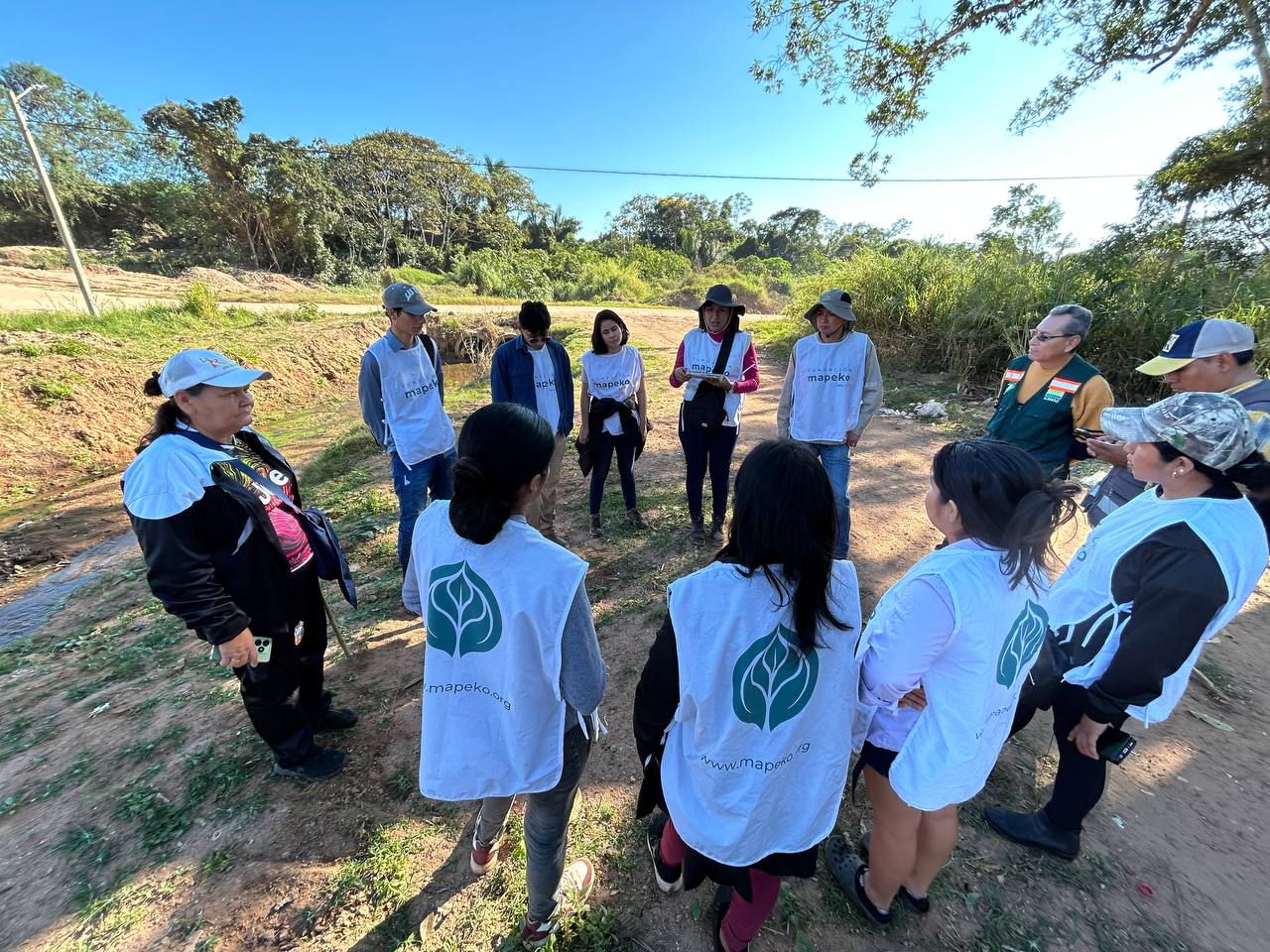
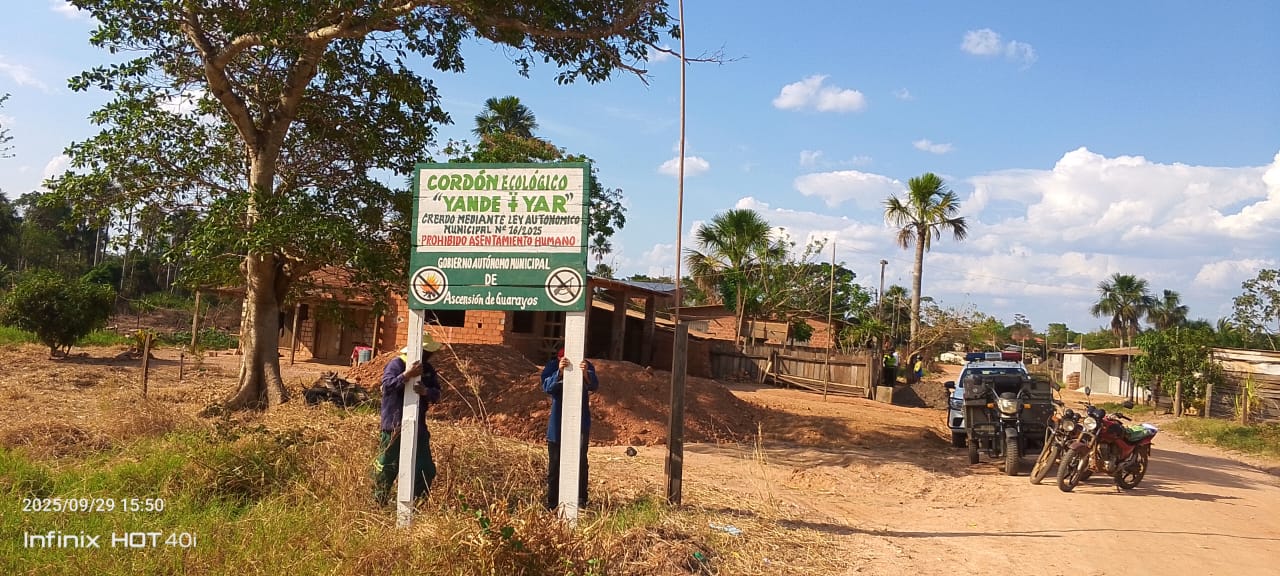
In response to this discovery, the team worked with the municipality’s Environmental Department to identify critical areas, establishing the Virgen de Cotoca zone as a priority. The plan involved intervening in three kilometers of urban forest to consolidate the first Urban Ecological Corridor in Ascensión de Guarayos. Within this space, two large green areas were established: Yande I Yar Park, covering 280,023 m², and a second conservation area that completed the protected perimeter.
This milestone for biodiversity wasn’t conceived solely in offices. Assessments were conducted with community members to understand what they were protecting. The results revealed a vibrant ecosystem that is home to 28 vertebrate species including birds, fish, reptiles, mammals, and amphibians, as well as 46 arthropod species and 48 plant species. The corridor is not just a park; it was a vital biological corridor for species connectivity within the urban area.
Although the project addresses an ecosystemic need, its actions have focused on social cohesion. Because this is the only remaining stretch of forest within the urban area, the goal was to beautify these zones to create healthy school environments and foster a critical environmental awareness among students. Abandoned spaces were transformed into ecological gardens, and a committee was formed to manage cleaning and raise awareness. As a result of this sense of ownership, the first Network of Tourist Guides for the Ecological Corridor was established.
However, the most critical aspect was the protection of the land. The project focused on curbing illegal settlements, uncontrolled urban sprawl, logging, and fires. This protection was formalized through the Municipal Law for the Creation and Protection of the Ecological Corridor, providing a legal framework for monitoring and conserving the area.
The evolution of the paúro project ultimately became a comprehensive strategy encompassing both water and green space protection. As he explains these achievements, Rolando’s voice rises, and a satisfied laugh emerges with each detail: “We did it. We installed the park, built cabins, hammocks, and swings. We established the 12-meter buffer zone with the neighboring properties and prevented the construction of a road that would have destroyed the ecosystem. We didn’t allow the habitat of the species that live there to be disrupted.”
Author

Related Articles
The fishing life in Tárcoles, amidst nets and tourists
Families in Tárcoles, on Costa Rica’s Central Pacific coast, have relied on small scale fishing for years—but this way of life is increasingly precarious. An alternative, fishing tours, has brought new opportunities.
The school that opened the sport fishing industry to women
In the world of sport fishing, women participate in pre-fishing activities (such as preparing food for the crews) and post-fishing activities (filleting, selling the catch, and cooking). A school that started in Guanacaste and is now located in Puntarenas seeks to integrate women into the workforce on tourist and sport fishing vessels.
